The Horse Has Already Left the Barn:

An Analysis of Recommendations 1 and 7 in the Final Report of the ELCA’s Commission for a Renewed Lutheran Church

The past couple years we have written extensively about the ELCA’s Commission for a Renewed Lutheran Church, which was formed in response to action taken by the 2022 Churchwide Assembly.  We have expressed deep concern over –

  • The primary mandate that was given to the Commission to be “particularly attentive to our shared commitment to dismantle racism.” 
  • The makeup of the Commission, with 20% being LGBTQ+ persons and 20% being DEIA officers or leaders at their place of employment and/or influence.
  • The DEIA audit which the 2022 Churchwide Assembly instructed the Church Council to have done of the ELCA’s governing documents and how the results of that audit might be incorporated into the work of the Commission. 
  • The consistent lack of specific information in all communications from the Commission.
  • The way in which the ELCA dismissed and ridiculed persons who were concerned through the document which they released, “Myths and Facts about Congregational Governance.”
  • The amendments to the ELCA Constitutions which have been recommended by the Commission, approved by the Church Council, and are being presented to the 2025 Churchwide Assembly, especially the proposed amendments to chapter 22 of the Churchwide Constitution, which would fast-track the approval process for amendments that come from the floor at the assembly.

But my concerns have only grown greater as I have read and analyzed the final report from the Commission, which was recently released.  A link to that final report can be found HERE

I have studied and sought to grasp the entire report – all 75 pages of it.  My overall impression is the same as what I have of all documents that come from the ELCA.  It is too long and excessively verbose.  I always wonder if the reason for the length and all the verbiage is to hope that people will not read it – at least not read all of it or read it carefully.  My second impression is that rather than help facilitate functioning so that the ELCA can better focus on its mission, the Commission has made the process and structure even more convoluted and complex.  It is as though the Commission has created deeper snow and/or thicker mud for the ELCA to now have to try to navigate its way through.

But what I find most alarming are Recommendations 1 and 7 in the final report, which have accomplished nothing less than cementing a DEIA value system and Marxist critical theory into the ELCA governing documents.  This infiltration of a radical leftist agenda into the governing documents is no longer something that we fear might happen this summer at the Churchwide Assembly.  It has already happened.  The horse has already left the barn.    

Recommendation 1 reveals the Commission’s values and priorities.  Recommendation 7 exposes their accomplishments.

Recommendation 1“Immediate Action on Dismantling Racism” – can be found on page 34 in the final report.  This recommendation reveals what the Commission values the most and feels most urgent about.  The Commission is recommending that “the ELCA Church Council immediately begin identifying and acting upon mutual accountability measures and compliance incentives across all expressions of the ELCA to ensure the proactive centering of dismantling racism within the denomination.”  These measures and incentives are to be guided by the recommendations outlined in the DEIA audit and the ELCA’s Strategy Toward Authentic Diversity.

Complaining about the slowness of the progress of the ELCA’s becoming in their eyes a “truly welcoming church” that realizes “authentic diversity,” the Commission’s position is that “all constitution and bylaw amendments needed for the development and implementation of these accountability measures and compliance incentives must be developed and advanced in time for consideration by the 2028 Churchwide Assembly.”  If they are not developed in time, then the ELCA Church Council needs to call for a special meeting of the Churchwide Assembly to evaluate and enact the necessary constitutional revisions. 

There is nothing else that the Commission sees as so urgent and compelling and feels as hot, bothered, and motivated about as dismantling racism.   

There are two things in the Rationale for Recommendation 1 that I found alarming.  First, the Commission admits that its “mandate was specific to the charge of dismantling racism.”  But it has enlarged its concern to encouraging the Church Council “to expand the work beyond dismantling racism to include dismantling discrimination against all historically underrepresented groups.”  More will be said about these groups in Recommendation 7.  I remember early on in the work of the Commission when Co-Chairperson Carla Christopher used the language of “dismantling oppression” rather than “dismantling racism” in a video regarding the work of the Commission.  I wrote to her and asked how that expansion happened, how victims of oppression will be identified, and whether people with traditional views who do not agree with the work of the Commission will become victims of oppression.  She wrote back, back-pedaling from “dismantling oppression” back to “dismantling racism.”  But here I see that she has reversed her course.

What is even more alarming in the Rationale for Recommendation 1 is the way in which it concludes with a sentence that gives a preview of what is to come in Recommendation 7.  It says, “While much that needs to be done to accomplish this work may be centered in our constitution and bylaws, which can only be amended by the Churchwide Assembly, the commission encourages the Church Council to act on continuing resolutions and policies that can advance this work before the 2028 Churchwide Assembly.”  Much of what we have feared the most is no longer something that might happen at the 2025 Churchwide Assembly.  It has already happened.  The horse has already left the barn.    

Recommendation 7 – “Diversity, Equity, Inclusion, and Accessibility Related Changes to Governing Documents and Recognition of Historically Underrepresented Groups” – can be found on pages 47-49 in the final report.  What is most disturbing here is that this Recommendation contains a number of continuing resolutions which the Commission recommended and which the Church Council has already approved, thereby making them already part of the ELCA’s governing documents.  What these continuing resolutions that are already approved have already done is nothing less than cementing a DEIA value system and Marxist critical theory into the official governing documents of the ELCA.  The horse has already left the barn.     

5.01.H24. gives definitions of Diversity, Equity, Inclusion, and Accessibility.  These definitions are now a part of the ELCA’s governing documents.   

5.01.I24. commits the ELCA “to working to intentionally lift up voices from historically underrepresented groups.”  There are many places throughout the final report and in the recommended changes to ELCA constitutions and bylaws where provision is made for “historically underrepresented groups” to have voice, vote, and representation far beyond their actual numbers within the membership of the ELCA.  This continuing resolution identifies “historically underrepresented groups” as including persons of color, persons whose primary language is other than English, persons of diverse gender identities, persons of diverse sexual orientations, persons experiencing poverty, persons of lower income, persons living with disabilities, and persons who are not natural-born United States citizens.

There is certainly no doubt that God loves all people.  In the First Reading for Easter Sunday Peter says at the house of Cornelius, “I truly understand that God shows no partiality” (Acts 10: 34).  The Second Reading for the Fourth Sunday of Easter describes “a great multitude that no one could count, from every nation, from all tribes and peoples and languages, standing before the throne and before the lamb” (Revelation 7: 9).  Consistently throughout the Bible God shows His love for the poor and commands that His people be concerned for the poor.  And among the things that the prophet Micah says that God requires of us is “to do justice and to love kindness” (Micah 6: 8).  What troubles me is the way in which through continuing resolution 5.01.J24. the Church Council has not only fully embraced every form of sexual orientation and gender identity.  It has also made the following a special privileged and protected class that one dare not discriminate against.

5.01.J24. Persons of diverse gender identities and persons of diverse sexual orientations means individuals who identify beyond the sex and gender binary, individuals whose gender identity may be fluid, and individuals who identify as lesbian, gay, bisexual, transgender, queer, intersex, asexual, or other sex, gender, and sexual identities that are more complex than sex, gender, and (sic).  (I believe something has been cut off in the final report.)

And then, to make it completely clear, the final report states the following – “Continuing resolutions 5.01.G24, 5.01.H24, 5.01.I24, and 5.01.J24 (as amended) were adopted by the Church Council and are now part of the ELCA’s governing documents.”

Why would anyone still believe that bound conscience has a chance to survive in the ELCA?  Bound conscience is the concept from 2009 in which the ELCA promised to provide a place of dignity and respect for those who hold traditional views regarding human sexuality.  Why would any congregation still believe that they would have the option of not calling a pastor with a “diverse gender identity” or a “diverse sexual orientation”?  What we knew all along would happen has happened.  The ELCA has officially turned its back on its promises from 2009.  The horse has already left the barn.     

And not only that but Marxist critical theory has been incorporated into the ELCA’s governing documents through the actions of the Church Council.  The whole language of dismantling racism – which is the primary mandate given to the Commission and as we saw in Recommendation 1 the primary concern of the Commission – reflects critical theory.  In this ideology racism is not just something that people say and do that they must stop saying and doing.  Rather it is seen as so embedded into the very structures of society that those structures must be torn down.  Built into the very systems of our culture are structures that privilege some people and lead to the oppression of others.  Those who are in positions of power and privilege are not going to voluntarily relinquish that power and privilege, so those systems must be dismantled and destroyed.  This perspective has now been incorporated into the official governing documents through action that has already been taken by the Church Council.  The horse has already left the barn.  Continuing Resolution 5.01.I24. contains this sentence.  “This church recognizes that humans have multiple aspects of their identities that are tied to systemic privilege and oppression that shape the lives of individuals and communities in distinct ways.”

HERE and HERE are links to the official ELCA news releases which tell about actions taken by the Church Council at their November 14-17, 2024 and April 3-6, 2025 meetings.  Do they give any indication of the full depth, seriousness, and significance of what happened at those meetings?  Absolutely not!  Instead the news release for November 14-17 uses this innocuous, non-specific language to describe the actions of the Church Council –

  • Approved amendments to “Constitutions, Bylaws, and Continuing Resolutions of the ELCA” that were drafted in response to the Diversity, Equity, Inclusion, Accessibility Audit.
  • Recommended to the 2025 Churchwide Assembly certain amendments to “Constitutions, Bylaws, and Continuing Resolutions of the ELCA” that were brought to the council by the Commission for a Renewed Lutheran Church.
  • Approved amendment of certain continuing resolutions in “Constitutions, Bylaws, and Continuing Resolutions of the ELCA.”
  • Acknowledged amendment to the governing documents of this church related to nonbinary inclusion and to gendered language in the constitution.     

And the news release for April 3-6 uses this equally innocuous and non-specific language.  The Church Council –

  • Authorized its Executive Committee to consult with the Strategy Toward Authentic Diversity advisory team to review its purpose and to create an ELCA handbook that includes recommendations for diversity, equity, inclusion, and accessibility (DEIA) standards for congregations.
  • Adopted continuing resolution amendments to “Constitutions, Bylaws, and Continuing Resolutions of the ELCA” that relate to the churchwide organization. 

* * * * * *

I would now like to conclude by saying a few words to those who might be persuaded to believe the ELCA’s claim that DEIA is supremely compatible with the gospel and truly reflects and is consistent with Biblical values.  First, the ELCA’s DEIA is not the gospel of the Bible.  The gospel of the Bible is the gospel of the forgiveness of sins and the hope of eternal life through Jesus and His death and resurrection.  The ELCA’s DEIA gospel is a gospel of God’s welcoming, including, and loving all people equally.  There is a major difference.  Jesus is not really necessary in the ELCA’s DEIA gospel.  Second, DEIA and critical theory are not gospel.  They are legalism at its absolute worst.

With DEIA and critical theory there is no satisfaction.  You can never do enough.  No matter how much you apologize for, repent of, and grovel over your racism, abuse of power, and misuse of privilege, it is never enough.  If you are white, and especially if you are a white male, you will never be able to apologize enough for, repent enough of, and grovel enough over the racism, abuse of power, and misuse of privilege of all white people around the world and in all times past.

With DEIA and critical theory there is no forgiveness.  There cannot be forgiveness, because if oppressed and marginalized people forgive oppressive, privileged people who have apologized, repented, and groveled enough, then oppressed and marginalized people will lose their power over privileged people, and power is what it is all about.

With DEIA and critical theory there is no deliverance.  If you are white – and worst of all, if you are a white male – then you cannot not be racist.  You will do everything you can to perpetuate the systems that have privileged and empowered you.  The only thing that can be done is for “woke people” – on behalf of the oppressed and marginalized – to tear down, dismantle, and destroy the systems that have empowered the privileged people.  (The only problem is that the “woke people” who lead the process of dismantling will then come into positions of power and privilege and themselves begin oppressing and marginalizing oppressed and marginalized people.  For that is what you get when the greatest value is power.)

The apostle Paul wrote to the Galatians, “I am astonished that you are so quickly deserting the one who called you in the grace of Christ and are turning to a different gospel – not that there is another gospel, but there are some who are confusing you and want to pervert the gospel of Christ” (Galatians 1: 6-7).  Paul then had some very strong words to say about those who were proclaiming a gospel contrary to what the Galatians had originally received.  I believe that his words are very relevant to what is happening in the ELCA today. 


LETTER FROM THE DIRECTOR – JUNE 2024

THE COMMISSION FOR A RENEWED LUTHERAN CHURCH:

HOLDING THEM ACCOUNTABLE

The ELCA’s Commission for a Renewed Lutheran Church (CRLC) was formed in response to action taken by the ELCA’s 2022 Churchwide Assembly. The assembly directed the Church Council “to establish a Commission for a Renewed Lutheran Church” which would be “particularly attentive to our shared commitment to dismantle racism” and would “present its findings and recommendations to the 2025 Churchwide Assembly in preparation for a possible reconstituting convention.”  

As I wrote in my February 2024 Letter from the Director (LINK), the phrase “dismantle racism” is very significant. It reflects the position that racism is not just something that some people think and do. Rather imbedded into the very nature of our society are structures that privilege and empower certain races (white people) and disempower, victimize, and marginalize all other races (BIPOC people). The ELCA is therefore saying that it is not enough to just be non-racist – to not use racist language. We must be anti-racist. We must break down the structures that empower some and dis-empower everyone else. As I also wrote in the February 2024 letter, the report of the “Dismantling Racism” internal committee during the Commission’s November 30-December 2 meeting took the concept even further. According to that committee, it is important that all of the work of the Commission “is completed through an intersectional lens of dismantling racism.” Those also are very significant words. According to the concept of intersectionality, the various systems that privilege and empower some and victimize and disempower everyone else are so intertwined and interconnected that all of these systems need to be dismantled, whether they be white supremacy, male dominance, agism, sexism, ableism, homophobia, transphobia, xenophobia, heteronormativity, or whatever.

Because of all that is involved with the concepts of dismantling racism and intersectionality, I was alarmed when I listened to a video on the Commission’s Facebook page from the two co-chairpersons, Carla Christopher and Leon Schwartz. A link to that Facebook page can be found HERE.  In that video Pastor Christopher said, “The language of the memorial and the commitment from each of the members of the CRLC also named dismantling oppression and ensuring equity wherever possible throughout our governing documents and the structure of the church.” 

Concerned enough about the full and actual meaning of “dismantling racism,” and then being even more concerned by her changing the language from “dismantling racism” to “dismantling oppression,” I wrote to her. Among my questions were the following –

·      What is the difference between dismantling racism and dismantling oppression?

·      Is the focus of the Commission going to be on “dismantling racism” (which I would interpret as more narrowly defined) or “dismantling oppression” (which I would interpret as more broadly defined)? 

·      If the focus is on “dismantling oppression,” how did that change come about and what will it mean? 

·      How will it be determined who is experiencing oppression? 

·      Will the working assumption be that if anyone feels oppressed, claims to be oppressed, and/or identifies as someone who is oppressed, that person is oppressed?

I then concluded by asking – since all the members of the ELCA with traditional views who speak up will probably be among the oppressed (even though they represent the majority of the people in the pews) – what will the Commission be doing to address that anticipated oppression?

I also responded to her saying that each of the members of the Commission is committed to “ensuring equity wherever possible throughout our governing documents and the structure of the church.” As glaring examples of inequity within the ELCA I mentioned the complete lack of speakers with traditional views at youth gatherings and Reconciling Works’ having a voice but no vote position on the ELCA Church Council while no organization with traditional views is in the same favored, privileged position.

Within less than two hours I received a response which I considered to be very dismissive and sloppy. In her email she backpedaled from dismantling oppression to dismantling racism. She also mentioned the “limited time and finite resources” of the Commission, insisted that the focus of the Commission “is specifically about structure and governance and constitutional language that may be more helpfully updated or clarified,” mentioned the “diversity of views” among the members of the Commission “regarding institutional structures and the relationships between the current three expressions of church,” and stated the desire of the Commission not to “duplicate or interrupt the work of other task forces,” such as the task force that is working on the statement on human sexuality.

In my response to her response, I did not bring up her mentioning the “limited time and finite resources” of the Commission. But I would say that twenty-two months have passed since the 2022 Churchwide Assembly, which directed the ELCA Church Council to form the Commission, while only fourteen months remain until the 2025 Churchwide Assembly, to whom the Commission is to “present its findings and recommendations . . . in preparation for a possible reconstituting convention.” Unless the Commission does far more in the next fourteen months than it has done in the past twenty-two months, I do not see it as having a report that will satisfy those who were instrumental in the passing of the resolution to form the Commission.    

However, I did respond – in order – to several other things she said in her email.

First, in regard to her backpedaling from “dismantling oppression” to “dismantling racism,” I reminded her of the significance of the “intersectionality” language from the “Dismantling Racism” internal committee (which I discussed in the second paragraph of this letter). I told her that I interpreted her mentioning “dismantling oppression” in light of that statement from that committee.

Second, the major part of my email was in response to her stating that the focus of the Commission “is specifically about structure and governance and constitutional language that may be more helpfully updated or clarified.” I shared with her how that statement reminded me of the comments made by the two members of the Commission who held a Listening Session for members of the Grand Canyon Synod, the Synod in which I am rostered. They said that the work of the Commission is focused on structure and governance and that there is no pre-determined outcome to the work of the Commission.

I wrote to Pastor Christopher, “Personally I find that very hard to believe. Everything from the makeup of the Commission – whom the ELCA Church Council chose to serve on the Commission – to the reports of the work of the Commission points to a pre-determined outcome.”

In regards to the makeup of the Commission, I pointed out that 20% – 7 out of 35 – are DEIA officers and/or leaders at their place of employment and/or influence and that the three members of the Commission who serve as assistants to a synodical bishop all work in the area of social justice activism. 

I then gave her a link to the article I wrote for the September 2023 issue of our newsletter, CORE Voice, where I discussed the makeup of the Commission – Once You Know the Makeup, You Know the Outcome – Lutheran Coalition for Renewal (CORE)

Regarding the work of the Commission, I also gave her a link to my February 2024 Letter from the Director, where I did an analysis of their November 30-December 2 meeting. LETTER FROM THE DIRECTOR – FEBRUARY 2024 – Lutheran Coalition for Renewal (CORE)

I continued by saying, “I do not see any way in which someone could claim that the Commission is merely concerned with governance and structure and its work does not have a pre-determined outcome. Rather the Commission was formed and is working hard to create a whole new church whose values and priorities will be based not upon Scripture, but upon critical race theory and DEIA ideology.”

Third, I responded to her saying that the Commission was formed so that it would have “a diversity of views regarding institutional structures and the relationships between the current three expressions of church.” I wrote, “The members of the Commission may have a diversity of views on those issues. There is certainly nothing in the reports from the meetings of the Commission that would tell me one way or the other. But the reports of your meetings certainly suggest no diversity of views in regard to the values and priorities that should shape the new Lutheran church.” 

Fourth, in response to her saying that the Commission will “stay within our scope and not duplicate or interrupt the work of other task forces,” such as the task force that is working on the statement on human sexuality, I said, “I certainly understand and would agree with that approach.” I explained that I mentioned the complete lack of speakers with traditional views at youth gatherings and ReconcilingWorks’ having a voice but no vote position on the ELCA Church Council but no organization with traditional views being in the same favored, privileged position not because I believe that these are matters that the Commission should concern itself with. Instead they are examples of how – even though each of the members of the Commission has made a commitment to “ensuring equity wherever possible throughout our governing documents and the structure of the church” – it is abundantly clear that in regard to the various positions on human sexuality, equity does not exist in the ELCA. 

I concluded by saying, “Thank you again for hearing and considering my concerns. Blessings in Christ.” I signed the letter – 

Dennis D. Nelson

Retired ELCA Pastor

Executive Director of Lutheran CORE

So far I have not received a response.


* * * * * * *

VIDEO MINISTRIES

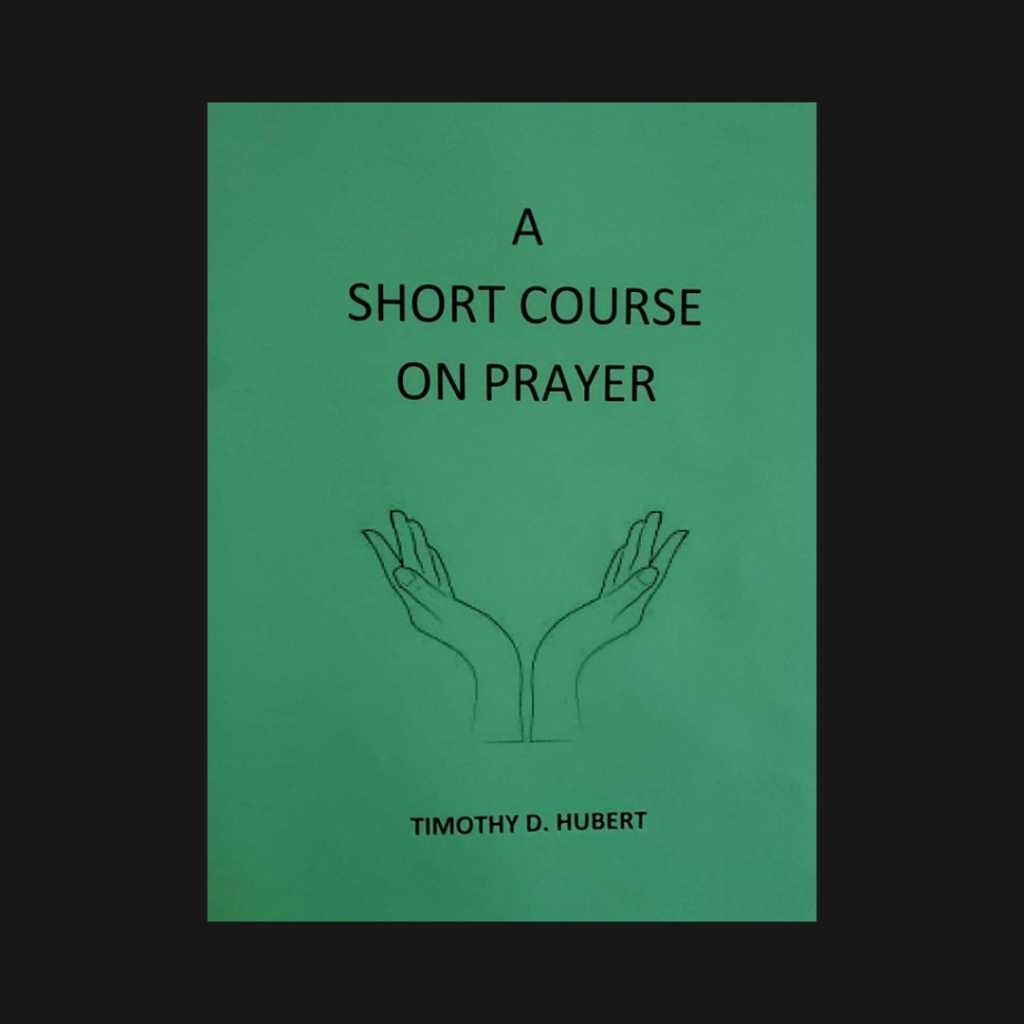
“A SHORT COURSE ON PRAYER”

by CATHY AMMLUNG AND TIM HUBERT

Many thanks to NALC pastors Cathy Ammlung and Tim Hubert for giving us a review of Tim’s book, “A Short Course on Prayer.” A link to their video review and be found HERE. A link to our You Tube channel, which contains reviews of around three dozen books as well as a dozen CORE Convictions videos on various topics related to the Christian faith and life, can be found HERE

This review is unusual in that it is more of an interview. Tim and Cathy have been friends for over forty years, and he was her ordination sponsor almost thirty-five years ago. Cathy has used various iterations of his manual on prayer throughout her ministry.

In this video review/interview, Cathy briefly describes the layout of the book. But mostly, she and Tim talk about his inspiration for writing it. They discuss the stumbling blocks to prayer experienced by many people. They examine some of the sixteen “prayer forms” in the first half of the book. And they reflect on some of the weightier issues about prayer: the joys and warnings, the hostility of the devil, and the spiritual warfare we are thrust into. Front and center is the insistence that prayer is a conversation, not a monologue. God himself provides words, topics, and insights for that conversation, and his Word grounds and centers every prayer form, directly or indirectly.

The interview is informal and casual, reflecting their long friendship and years of conversation on prayer as well as many other topics.

Folks interested in Tim’s book, for themselves or as a manual for an adult study group, may contact Cathy at [email protected]. She will put you in touch with Tim!


An Unanticipated Agreement

I find that usually I can anticipate fairly accurately with whom I will agree or disagree.  However, there are times when I am caught by surprise.  Such was the case with a public letter written by a member of the board of Extraordinary Lutheran Ministries (ELM).  

On its website this organization describes its mission in this way: “Extraordinary Lutheran Ministries organizes queer seminarians and rostered ministers, confronts barriers and systemic oppression, and activates queer ideas and movements within the Lutheran Church.”

This is not the kind of organization that I would expect myself to find something to agree on with.  So how did that come about?

A few months ago in celebration of Pride Month (June) the ELCA posted a link to the document, A Lutheran Introduction to SOGIE by ReconcilingWorks.  SOGIE stands for Sexual Orientation, Gender Identity, and Gender Expression.

Pastor Suzannah Porter, an ELCA pastor and member of the board of Extraordinary Lutheran Ministries, responded by commenting with concern that the ELCA was giving the impression that the whole church body is LGBTQ+ affirming, when in fact it is not, since there are congregations which hold to traditional sexual ethics with the church’s sanction.  Pastor Porter supported her statement by quoting the Bound Conscience policy which is a prominent part of the 2009 social statement, Human Sexuality: Gift and Trust.  That document described four different positions regarding same gender relationships, which it acknowledged that people within “this church” hold “with conviction and integrity.”  On the basis of “the bound conscience,” it said, “We . . . believe that this church . . . will include these different understandings and practices within its life as it seeks to live out its mission and ministry in the world.”  In other words, traditional views of human sexuality have the full endorsement and sanction of a social statement that was approved by no less an authority than an ELCA Churchwide Assembly. 

What happened after Pastor Porter sought to expose the ELCA’s dishonesty by revealing that the ELCA actually sanctions traditional views when it tries to give the impression that it is LGBTQ+ affirming?  Several things.

First, others replied to Pastor Porter’s comment with stories of lack of LGBTQ+ acceptance at various ELCA congregations.

Second, the ELCA deleted Pastor Porter’s comment – the only one, to her knowledge, that cited the Bound Conscience policy.  

Third, Pastor Porter responded in an angry public letter condemning the ELCA’s action.  She said, “It is Pride 2021 month, and I cannot be deleted today.” 

Here is more of what she said:

“ELCA, get back here and answer for yourself. On the post listing Reconciling Works SOGI resources (found herehttp://bit.ly/elcasogipost) you deleted my comment clearly stating that projecting the image that the ELCA is welcoming and affirming of queer people without clearly stating that it is also our policy that the church can call queer people to repentance and refuse to recognize same sex marriage is misrepresentation.

“After now hundreds of people think the whole denomination is affirming, you deleted the only comment that clarified your policy. And erased the testimony of the replies of people who labored to tell their stories. But you seem to keep the reattempt when I stated my position on the board and council. This leads me to believe that misrepresentation was not just an accident, it was the goal.”

What is going on here?  A lot.

First, the ELCA sought to silence a leader in the LGBTQ+ community, in the name of being LGBTQ+ affirming.

Second, Lutheran CORE and ELM agree that honesty, integrity, and transparency are important.  What is actually done in the church needs to match what public statements say will be done and what official policy says should be done.

Third, the ELCA’s misrepresentation, as Pastor Porter calls it, is dishonest and unhelpful both to people seeking LGBTQ+ affirming communities and to those who hold to traditional sexual ethics.  It would be far better for the ELCA to be truthful and honest and consistent all across the board. 

Now, to be sure, Lutheran CORE and Extraordinary Lutheran Ministries would have totally opposite purposes for raising these issues.

Extraordinary Lutheran Ministries would want the ELCA to eliminate language that sanctions traditional views, while Lutheran CORE would want the ELCA to keep its promise and live up to its commitment to also honor and provide a place for traditional views. 

Nevertheless, Pastor Porter’s point stands, and we agree.  The ELCA’s actions were dishonest and unhelpful.    

Click here to read the ELCA’s original post.

Click here to read Pastor Porter’s original post.


Devotion for Monday, November 6, 2017

“Destruction is in her midst; oppression and deceit do not depart from her streets.  For it is not an enemy who reproaches me, then I could bear it; nor is it one who hates me who has exalted himself against me, then I could hide myself from him.”  (Psalm 55:11-12)


All around are those who plot and seek to gain what is not theirs for their own sake.  It is hard to live in a world with so many that are deceitful.  Yet, here we are.  How can one hide from the wickedness that is on every side?  Hide in the Lord who knows all things and will not anything come upon You that will separate you from Him.  Come to the Lord and find the only rest in a world gone mad.


Lord, these are words I can hear, but they are so hard to act upon.  Guide the thoughts of my mind and the actions I make to come into conformity with what You are saying.  Lead me by Your Spirit to walk in the ways You have established in spite of all that is going on around me.  Lead me O Lord that I would follow You all the days of my life and walk in Your goodness.

Lord Jesus, for this very reason You have come that as many as turn to You would discover the peace which surpasses all understanding.  Lead me Lord Jesus in the way I should go and then through Your Spirit, give the means to walk in this way.  By Your grace alone am I not like the others who hate You.  In thankfulness, guide my heart ever upward to walk with You alone.  Amen.