If You Leave the ELCA

My congregation voted successfully to leave the ELCA in 2023.  Reflecting on the past three years, here are three things I would encourage you to keep in mind if you choose to follow suit.

First of all, remember that, whether you stay in the ELCA or not, the priority is Christ.  He is the center.  The mission of the Church is to preach the Gospel of forgiveness of sins, life and salvation in Jesus Christ.  We voted to leave the ELCA because we came to believe that preaching the Gospel was no longer the priority.  Instead, we believed that another gospel, or other gospels, had taken the place of the true Gospel in the mission and ministry of the ELCA. 

One of the dangers of remaining in the ELCA and “continuing the fight” was that, in doing so, we would be distracted by the ongoing culture wars in our country and in the world.   Don’t assume that the temptation to focus on the culture wars will dissipate if you leave the ELCA.  The same forces that worked against the Gospel from within the ELCA, still do so from the larger culture.  The key is not to try to win the cultural wars, but not to let them distract us from the mission of the Church.

A second thing to remember is that the political right is not automatically an ally of the Gospel.  Several members of my congregation assumed that with a successful vote to leave the ELCA, we would begin to openly embrace the causes of the political right.  There is an old saying among progressives that says, “No enemies to the left.”  Don’t be tempted to turn that around by saying, “No enemies to the right.”  While we are disgusted by the antisemitism, gender and identity politics of the left, we should not forget that there are equally loud voices of antisemitism, misogyny, and identity politics on the right.  There really is a movement calling itself Christian Nationalism that is racist and sexist.  There really are popular voices like Nick Fuentes that encourage your people to embrace antisemitism.  Guard your congregation against these trends. 

There was an earlier split within Lutheranism in the 1970s.  In that case, it was people on the left who departed and formed a new denomination.  Eventually, they helped form the ELCA.  One of the mistakes that they made, in my opinion, is that they tended to assume that if their old denomination was against something, they should embrace it.  Many seemed unable to recognize that it is also possible to go too far to the left. 

My third warning has to do with the reality of spiritual warfare.  The devil loves to sow division.  Even on the human level, it can be observed that once a congregation experiences a division, it becomes easier for new divisions to arise.  The devil certainly knows that.  He will seek any opportunity to make small disagreements into church dividing ones.  He is also alert to any spiritual vacuum.  When a congregation leaves a denomination it is alone until it becomes part of a new denomination.  Mutual support among clergy and congregations, as well as ecclesial oversight take time to grow.  Beware of unexpected spiritual forces that may arise causing chaos and division. 

Whether you stay in the ELCA or seek to leave, remember that a successful vote one way or the other does not solve all of your problems.  You live in a sinful world.  Your mission is to proclaim the Gospel of Jesus Christ.  Pray that God will help you to keep steadfast in His Word, amidst the trials and temptations that will inevitably come your way. 


NALC Continental Youth Gathering: Forming Young Disciples Across North America

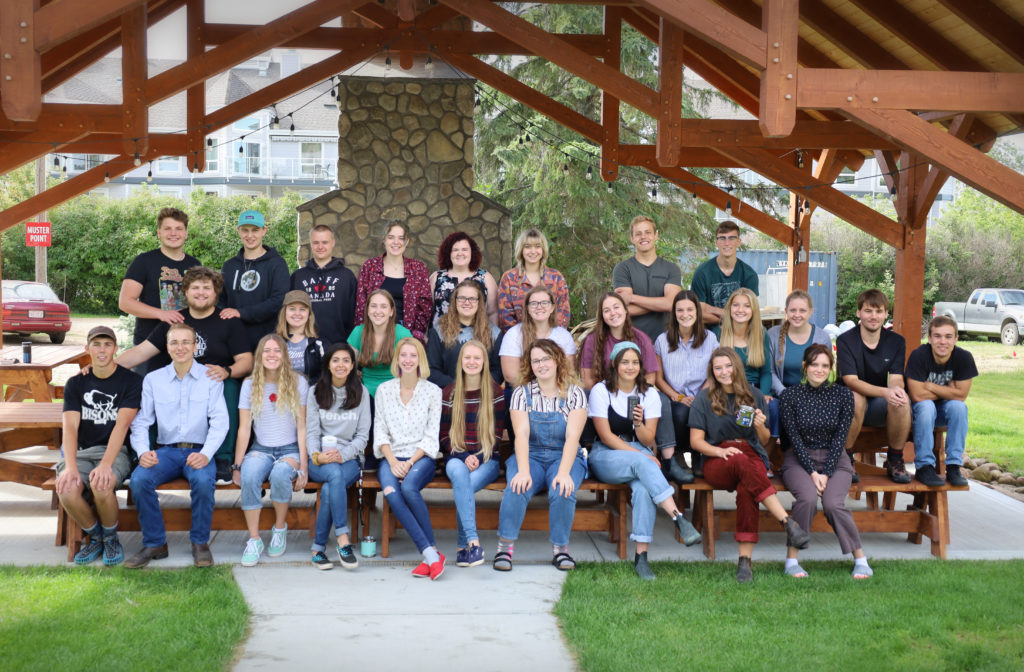
Every two years, youth and their leaders from across the North American Lutheran Church (NALC) will  gather for four days of worship, teaching, and service at the Continental Youth Gathering (CYG). What began as a hopeful experiment in 2024 has already grown into a vital tradition where young people encounter Christ, deepen their faith, and discover what it means to live as His disciples in the world.

The first CYG – WE BELONG, was held in Boerne, Texas, in 2024 and brought together youth, adult leaders, and volunteers from across the United States and Canada. The next CYG – REJOICE, will take place July 7–10, 2026, at St. John Lutheran Church in Roanoke, Virginia, where organizers are planning for approximately 400 youth, leaders and volunteers. While the event is hosted by the NALC, its reach and impact extends well beyond. It includes partner agencies and the local community who play significant roles in making it possible.

At its heart, the CYG is not a “conference” or a “camp,” but a gathering built around Word, worship, and witness. Each day centers on Scripture, with teaching that is deeply rooted in the Gospel and the Lutheran confessional tradition, yet accessible and engaging for today’s youth. Large-group sessions combine solid biblical preaching with practical application, helping young people connect Christ’s finished work on the cross to the very real questions and pressures they face in daily life. Bible studies invite youth into smaller communities where they can dig deeper, share their own experiences, and learn to read Scripture not just as a story “back then,” but as God’s living Word for them today. And Worship is part of the daily rhythm, not a side event. Through song, prayer, and proclamation, participants are invited to bring their whole selves to the Lord—joys, doubts, anxieties, and hopes. By celebrating the Lord’s Supper with the wider church, participants are reminded that we belong to something larger than a single local congregation; we belong to the one, holy, catholic, and apostolic Church and that is a reason to rejoice.

A key aspect of the 2026 gathering in Roanoke will be mission projects throughout the local community. Youth will step beyond the walls of the host church to serve alongside local organizations—supporting shelters, food ministries, neighborhood projects, and other community partners.

These mission experiences are not simply “volunteer hours” to be logged. They are framed as an extension of the Chrisitan life: a lived response to the grace participants have received in Christ. Throughout the CYG youth are guided to reflect on why Christians serve, how Christ is present in the margins, and what it means to be a witness in everyday life.

For local agencies and ministries, CYG offers an influx of energetic volunteers and an opportunity to build longer-term relationships with congregations across North America. Many youth will return home eager to continue serving in their own communities, inspired by what they experienced together in Roanoke.

Events like the Continental Youth Gathering do not happen in isolation. They rely on a web of partners—congregations, local ministries, prayer supporters, and agencies that share a commitment to forming lifelong disciples of Jesus.

You can support the CYG in a variety of ways:

  • Pray and give encouragement to youth, leaders, organizers, speakers and those volunteering.
  • If you are a local mission in Roanoke reach out to the Director of Youth and Family Ministries to see how we can partner.
  • Financial support—through designated gifts, sponsorships, or grants—helps keep registration costs accessible, provides scholarships for youth from smaller congregations, and underwrites the local mission projects we are able to offer in Roanoke.
  • Help spread the word so that more congregations can send youth and leaders.

In a world where many young people feel disconnected from church, the CYG offers a hopeful counter-story: a living picture of the Gospel at work, drawing together youth, mentors, and congregations around Christ and His mission.

For more information contact Pastor Teresa Peters at [email protected]

If you would like to register you can do so here: https://thenalc.org/en-us/our-work/equipping-disciples/families/


GO Into the GAP

Once the endless meetings, insulting slurs, character attacks, hurt feelings, and procedural difficulties involved in leaving one ecclesial community and entering another are over, the remaining congregation members are often fatigued. Yet they are often galvanized by the process’ inevitable conflicts and are more committed as disciples of Jesus Christ than ever. They hope that the Lord will reward their faithfulness by swelling their ranks, securing their sometimes-tenuous finances, and allow them to return once again to whatever is identified as the golden age of the congregation’s life.

The Lord, in His mercy, rarely does this, at least in any easily recognizable, straightforward way.  The process of reaffiliating for the local congregation is always, to a larger or smaller degree, a traumatic one.  Before a congregation is ready to properly disciple a significant number of people, there is usually work the Lord needs to do within us first.  There is a gap between what we were and what we will need to be for the mission the Lord has planned for us.  I want to encourage anyone facing this to GO intentionally into that GAP:

Go deep with God:  Lutherans confess that the Spirit uses God’s Word and Sacraments to create and sustain saving faith in the hearts of people and thereby constitutes the Church.  As Luther avers, it is only in this way that we are “called, gathered, enlightened and sanctified.”  Don’t do generic Bible studies but do some focused on God’s promises and power related to healing, mission, and yes, even vengeance upon those who persecute His people (having one’s character assassinated by people you love is a real, though mild, form of white martyrdom).  Let the Lord’s Word be a branch thrown into the oft unspoken tension, pain, and ennui of the bitter waters of church hurt and make them sweet.

Open your heart to the new thing the Lord wants to do:  Paul’s ministry changed radically after he was called by Jesus.  Your congregation has been called by Jesus too, and it is not likely that He has called it to do basically what it has done in the past, just with purer doctrine.  This is not because local traditions are bad or change is good, but because if Jesus has called you into a new denominational affiliation, it is for the purpose of mission, and the mission field is always in flux.  Indeed, learning that the mission field lies at our doorstep rather than in other countries is a radical thing for many long-established congregations.  Please note that what I am issuing here is not a call to radical change, but rather to radical openness to God’s leading.

Get to know your mission field: Don’t assume you know your community’s spiritual needs.  Remember, when you ASSUME, you make an ASS out of U and ME.  As a Gen X’er I typically assume that Christianity’s chief rival is atheism.  For those under 40, it is paganism.  Does your congregation’s ministry take this into account?  What are the socio-economic pressures with which your visitors are dealing?  What are the most common family dynamics and dysfunctions?  Learn what people will need in your context to become good Christian disciples apart from orthodox doctrinal commitments.

Align yourself with what God is already doing: Ministry changed for me and my congregation when we stopped having a plan to reach people and started recognizing what the Lord was already doing with those He was gathering, then putting our time, talent, and treasures behind that.  “Unless the Lord builds the house, the laborer works in vain.”

Patiently wait for God, then move decisively: Don’t let anxiety about the future push your congregation to waste energy on mission to which the Lord is not calling you.  The Church’s only mission is the Great Commission, but your congregation is not the Church.  Your congregation is a church, and God is not calling you to do everything.  Instead of trying to reach some group or create some ministry that leadership thinks is essential to the congregation’s long term survival, trust the Lord with your future.  It may be that the ministry everyone thinks critical must have the foundation the Lord wishes to provide now.

GO into the GAP without fear, for it is not the valley of the shadow of death, but rather God’s way of teaching you trust on the way to the green fields and still waters for which He has claimed you.


July 2024 Newsletter


January 2024 Newsletter


Mission Under Accompaniment

Director’s Note: Spencer Wentland is uniquely qualified to write this article analyzing the ELCA’s concept of global mission as accompaniment rather than evangelism – as responding to requests for help from indigenous churches rather than being concerned to share the message of Jesus with unreached peoples.  Spencer is a member of our young adult group, which meets via zoom about once a month for fellowship and support.  He is passionate about reaching people who do not know Jesus.  He has much international experience, including studying and serving in a discipleship community in Denmark.  He has served as an ELCA lay missionary in Japan and has written on the theology of global mission of different Christian groups. 

The ELCA defines accompaniment as “…walking together in a solidarity that practices interdependence and mutuality[*] (Global Mission, emphasis in original). Although often portrayed as a biblical theology coming out of the disciples’ encounter with Jesus on the road to Emmaus, it is strongly influenced by and rooted in liberation theology[†]. My immediate concern with it, as a heuristic to the what and where of mission, is that it is antithetical to the Pauline priority on unreached places.

The Apostle Paul emphasized not building on another’s foundation but to establish the Church where it does not exist. Combined with Jesus’ teaching that the Gospel must be preached in all nations (Gk. ethnos, often understood as ethno-linguistic people groups by many missiologists) and then the end will come, there has been a strong emphasis on sending missionaries to work amongst unreached and unengaged people groups[‡].

While working as an ELCA missionary, I heard about experienced mission personnel being sent home while the Japanese Evangelical Lutheran Church was told how they were going to become less dependent on the ELCA. In the name of being post-colonial, it was an ironically patronizing execution of implementing an accompaniment model.

Accompaniment is actually very good in shaping how we do mission. We should not ignore the presence and work of indigenous Lutherans. If consistent with the values of accompaniment, it’s a good way to think about working together in the larger context of God’s mission. It reminds us that the task of mission must be informed by the catholicity of the Church as well as its apostolic nature. It also informs us to do mission in the pattern and practice of Christ himself who is Immanuel.

The problems with accompaniment are when it determines what the content of mission is and where it is done. When applied to the what of mission, it frames the whole task into a ministry of presence. This collapses into the problem that when everything is mission, nothing is mission. The primary task of establishing the Church in unreached places, making disciples and evangelical mission is diminished into almost oblivion by tasks being determined by the partner denomination. True accompaniment would involve both churches determining the content of mission work in the light of both Scripture and context. Working together is key, not completely abrogating task criteria to the partner church.

The ELCA’s requirement that pre-existing Lutheran churches request the ELCA to send missionaries (an effort in being post-colonial) assures that no missionaries will ever be sent to unengaged people groups. The Japanese are the second largest unreached people group, so there is an odd and good anomaly that work is going on there. During my missionary orientation, I asked if someone had a vision like Paul of a man from Macedonia, saying come here, would that qualify a call (Acts 16)? Is the Holy Spirit leading with the Word, or are we reducing the idea of being spirit-led to a democratized principle of the external call coming through partner churches?

In conclusion, accompaniment is a mixed bag. It’s great for the how of mission, and it is a true gift. However, it needs to be understood in the larger context of the ELCA’s constitution and statement of faith, including its responsibility to work for the fulfillment of the Great Commission. To do this, the primary tasks need to be strategic partnership for the purposes of mission development/evangelical mission and a willingness to send people to places where no Christians, let alone Lutherans, exist.

Photograph courtesy of Spencer Wentland; it is of a protestant church in Okinawa.


[*] “Global Mission.” Elca.Org. Evangelical Lutheran Church in America, Accessed November 5, 2023. https://www.elca.org/Our-Work/Global-Mission.

[†] ORDÓÑEZ, CLAUDIA. “Public Health Needs Liberation Theology.” Aquinas Emory Thinks. Aquinas Center at Candler School of Theology, February 15, 2021. https://aquinasemorythinks.com/public-health-needs-liberation-theology/.

[‡] Unreached: relative to the population living near a gospel witness. Imagine an American city of about 250,000 people and if there is only about three or four churches of twenty people and no youth groups. Unengaged: has any effort been made by Christians to bring the Gospel and make disciples among this particular people group?


In Faith

“We must always give thanks to God for you, brothers and sisters, and rightly so, because your faith is growing more and more, and the love all of you have for one another is increasing.” 2 Thessalonians 1:3

The congregation of St. Paul located in Pensacola, Florida began the discernment process of leaving the ELCA in 2018. We had the 2nd vote to leave the Florida-Bahamas (FB) Synod of the ELCA in 2019. We expected some challenges in leaving because of the small group of members who wanted to remain in the ELCA. The congregation voted with a super-majority to leave the FB Synod. St. Paul applied to and joined the North American Lutheran Church (NALC) in 2020. Shortly after being received into the NALC, the congregation council received a letter from the FB Synod informing us that we could not leave.

The congregation council of that period were faithful in their commitment to Christ. They had a strength in faith that was unwavering. It proved to be a blessing for us as the FB Synod attempted to stop the people of God from leaving. To resolve the issue of St. Paul leaving the ELCA, the congregation council filed a motion in court. This was to maintain our rights to the building and the financials of St. Paul. During the legal process, letters with false statements were sent to the church members of St. Paul (NALC). Slanderous statements were made against the council and me. The ugliness of letters from the FB Synod showed a lack of Christian love for others and did not speak the truth of the intentions within the ELCA. The object of the ELCA was and I believe still is to “suppress the truth” of what they are doing or what they have done. We had suggested that the majority (us) and the minority (them) could share the building. But that was met with another ugly response. The Bishop of the FB Synod stated in words like these: Any other denomination but the NALC would have been okay. But not the NALC.

Eventually after many legal disputes the FB Synod Bishop filed a summary of judgment with the claim of ecclesiastical hierarchy. Taking the matter away from the civil court and giving it back to the FB Synod to make the final determination. The ruling gave our building, bank accounts, and endowment funds to the FB Synod and the small group of people who wanted to stay in the ELCA.

This could have been crushing for us if it were not for “faith.” Instead, the ruling of the judge based on the ecclesiastical hierarchy was freeing! Shortly after we lost everything to the ruling, God founded a new name for us. Led by the Spirit, Epiphany Lutheran Church became our new name. In 2021 we sought and found a new location for worship. I was introduced to Rabbi Tokajer in September, and we began worshipping at the Synagogue on Nov. 7, 2021.

In faith we left the building in Pensacola for a new beginning. With our vision clear and our faith steadfast in Christ, we began rebuilding and evangelizing for God’s church in the new location. With little financial stability we stepped out. In our faith journey, we didn’t think about what was lost. Instead, we recognized how much God was providing.

I encourage pastors discerning their call to contact the General Secretary of the NALC. The threats from the ELCA that place fear into individual pastors is nothing more than evil. If you want to remain faithful to the Word of God, I encourage you to place your assurance in Christ not the ELCA. The letters I received informed me that I was nothing without their endorsement. The ELCA didn’t call me into ministry. God called me into the ministry of Word and Sacrament. What about my pension and medical benefits? Have faith! As God is my witness, this question came to my mind too. It was a fleeting thought as I discerned the call to serve in faithfulness. 

In March of 2023, I spoke to the congregation about our faith walk. I referred to the summary of judgment and the loss of our assets and property. In the message of faith I said, “We lost everything for the sake of Christ.” It is in this loss that we found out just how strong and faith filled we were. As I’ve said many times, “It’s easy to have faith when everything is going well in your life.” With the help of God, we’ve grown in number, in spirit, and in faithfulness. Like the letter of Paul to the Thessalonians, we lift up the church and all those who continue their journey in “faith.” We share the love of Christ with new believers and all visitors at Epiphany Pensacola. All are welcome to experience the love and joy of Christ in worship.

As I am writing this article it just dawned on me that on Nov. 7, 2023, when we break ground on a new church building it will be our 2nd anniversary of this new start congregation in Pensacola, Florida. God has blessed us with generous financial support for the church property. The mission and ministry have been financially supported by several NALC churches. We’ve received domestic mission partnerships from other NALC churches. The congregation has grown, and the people of God have been generous in supporting the mission and ministry of Christ. Losing everything for the sake of the Gospel has been transformational to the members of Epiphany Pensacola.   

Faithfully Serving,

The Rev. Dr. Franklin J. Gore

Epiphany Lutheran Church

850-287-5667

“For it is by grace you have been saved, through faith – and this not from yourselves, it is the gift of God – not by works, so that no one can boast.” (Eph. 2:8-9)

Photos courtesy of Brenda Ekstrom and Donna Busarow.


Training Disciple-Makers

“…take up twelve stones from the middle of the Jordan…” Joshua 4:3

We wish God’s blessings upon Dean Rostad, president, and the Canadian Lutheran Bible Institute.  This is the third of a series of three articles about various residential discipleship ministries for young adults.   We began in January by featuring Faith Greenhouse, connected with Faith Lutheran Church (LCMC) in Hutchinson, Minnesota.  We continued in March with the Awaken Project (TAP). TAP is a non-profit organization housed on the campus of Mt. Carmel Ministries in Alexandria, Minnesota.  We thank God for these ministries and pray for them as they work to raise up a whole new generation of followers of Jesus and leaders in the Church. 

After 40 years of wandering in the desert, the Israelites were about to experience God’s saving work in a profound way – walking through the parted (piled-up) Jordan River to enter the Promised Land. So that this God event would never be forgotten, God instructed them to take up twelve stones from the middle of the Jordan. These rocks of remembrance were to become physical pointers to God’s saving action in their lives. God never wants us to forget how He has moved in our lives.

My name is Dean Rostad and I have the privilege of serving as the President of the Canadian Lutheran Bible Institute (CLBI) in Camrose, Alberta. CLBI is a campus-based Bible college through which 1000s of young adults have been trained to become disciple-makers in their churches, neighborhoods, and professions. In 2023, CLBI’s vibrant discipling community comprises 45 students, staff and committed volunteers. Just as Jesus discipled along the road, around the table and in the community, we also do.  Our students experience a different Bible class each week taught by high-caliber instructors from all over North America and beyond. Some weeks learning is off campus through inner-city ministry experiences, canoeing/hiking in the mountains, or serving cross-culturally. Each student is discipled one-on-one and is part of a rich weekly discipleship group that meets in a staff home. All of this is done to help CLBI achieve its mission of discipling young adults in the way of Jesus and equipping them for a life of mission in their vocations (be that as a pastor, baker or candlestick maker). I never know how Jesus is going to make a profound impact in our students’ lives, but I am completely confident that He always will.

When I ask alumni how God impacted their life while they were at CLBI (aka their rock of remembrance from the Jordan), the answers are incredibly varied: their faith took three steps deeper in Romans class, while being discipled by a staff member, they realized that they needed to stop trying to prove themselves to God and others and simply rest in the gospel,  a late-night conversation in the dorm led them to finally forgive someone, a cross-cultural ministry experience awakened a calling within them to bring the gospel to those who have never heard it, when they discovered they had found the spiritual family they had longed for. These are all significant transformational rocks of remembrance.

Currently, two members of the CLBI community are in online seminary studies with the Institute of Lutheran Theology. Both had no intention of going into pastoral ministry when they first came to CLBI. Once again, I love watching how Jesus changes the trajectory of people’s lives.

Since 1932 Jesus has been changing lives through this school. Please pray with me that God will continue to raise up all of the students and donors needed to ensure that current and future generations will have the opportunity to encounter Jesus in this holy place. For American students, the complete cost for eight months is just over $10,000 USD. That even includes a January trip to San Pedro, California for our students to connect with another Lutheran discipling community. To learn more about this incredible jewel of a school, visit clbi.edu.

What is your “rock of remembrance”? What is your significant God experience that marked a new trajectory for your life?

Sincerely Pastor Dean Rostad

CLBI President

[email protected]


September 2023 Newsletter


Prevailing Against the Gates

“Alderaan? I’m not going to Alderaan. I’ve got to get home. It’s late. I’m in for it as it is.”

Name that movie.  Name that scene.  Anyone with even a passing interest in the Star Wars franchise knows this one. It’s a pivotal moment.  Obi Wan asks Luke to come along, inviting him on a journey. It’s the beginning of Luke’s heroic journey; it’s a term penned by Professor Joseph Campbell who traced such stories through history, all of which followed a certain pattern and all leading to a central task: prevailing against darkness. 

George Lucas conferred with Campbell while writing the first three movies of the series.  Maybe that’s why most aficionados consider them the best of the nine. I find it ironic that when I first saw that movie, I looked like the kid being given a light saber.  Now I’m the white-haired old guy saying, “Hey, come along this way…” and for what it’s worth Luke’s first response is basically, “No thanks old man, I’ve got to get home and work on some evaporators.” In short order Luke experiences the loss of his aunt and uncle, crosses the threshold of Yes and with Obi Wan goes down into the valley of the spaceport.  Lucas knew what he was about.  The imagery was subtle, but followed the ancient pattern, down into the valley of the shadow of death with an outcome unknown. 

At our August board meeting of Lutheran CORE, our executive director Dennis Nelson led us through a bible study on the trip to Caesarea Philippi and the question, “Who do people say the son of man is?” Dennis offered a quick survey of Simon’s response, a look at the meaning of being given the keys and what that might entail, and then an insight into the gates, the gates that will not prevail against the rock. Then Jesus gave Simon his new identity, role, and assurance, “And I tell you, you are Peter, and on this rock I will build my church, and the gates of Hades will not prevail against it.”

The thing is that gates don’t take territory.  They don’t advance against an intruder.  They attempt to hold back an incursion.  Their role is to block that which is outside, like an opening in any good boundary regulates what can come in and what will go out.  Why can’t these gates prevail?  I sat there and soaked in that insight.  Of the many times I had explored that text, I asked who is Jesus in a pagan culture, what does it mean to be given the authority and therefore the power of the keys to bring life and the promise of forgiveness and eternal life?  What did it mean that Peter had a sufficiently robust relationship that he could endure the challenge of being compared to Satan and standing behind? And as our walk with Jesus becomes more personal, what does it mean that we find ourselves more open to being challenged in our brokenness and sin (sin that the Gospel may release)? And then Dennis brought up the idea of prevailing against the gates.  That invigorated a lively conversation around the table. 

What does it take to prevail against those gates, not merely hunker down and survive, but prevail?  Not in a militaristic sense, but certainly with a recognition that the church was founded to be movemental, to advance into new territory, to train and equip those who would bring the Gospel from Jerusalem, to Judea, to Samaria and all the ends of the earth.  How are we doing with that in our own contexts?  Were any of us trained to lead a movement?  Are we prevailing? Most of us were taught to preach, teach, bring comfort to the homebound and hospitalized, baptize the children, marry the silly romantics, bury the loved ones of the grieving. 

What if prevailing is more than that? In these times that often feel like we are traversing down into the valley of the shadow, what tools did we miss in seminary that we need for the journey? If you can find a copy of the book In The Valley of the Shadow by Hanns Lilje, it’s worth a read.  Lilje was a contemporary of Bonhoeffer—he survived his experience in the camps, later became a Bishop and wrote a catechism for adults.

Drawing from the disparate training of those on the Board, friends of CORE and others we will likely recruit, we are working on providing tasters on topics we didn’t learn in seminary.  During my brief stint as an assistant to the bishop in the ELCA’s Sierra Pacific Synod, I was called to manage first call theological education as part of a team for region 2.  Since I like to be data driven when it comes to providing training and support, I got all our first call pastors together, asked how it was going, and what do they think they missed?  I heard an earful.  So many things.  And that was twenty-five years ago. 

Since then, we’ve experienced the sexuality wars, the worship wars, the decline of Christianity numerically in the US, Covid, rising racial tensions, massive rejection of the faith by a younger generation (half of GenZ claiming to be agnostic or atheist)[i], family brokenness splashing out onto all the mediating structures of society including the church.  Etcetera. These tasters could be provided live on Zoom and recorded for later viewing.  We could interact via a social media platform as we figure out how to use what we’re learning.  Some of the topics being considered are:

  1. visionary leadership, the power of casting a vision and how to do so
  2. how to reach multiple cultures in our contexts including how to maintain core values amid an influx of new members
  3. how to be a church that can reach new people, a look at everything from Celtic models to multi-generational faith formation
  4. how to mobilize faith for mission and ministry within the congregation and in the mission field of their daily lives
  5. managing conflict and boundaries
  6. creating healthy staff teams
  7. creating leadership pipelines for disciples who know how to make disciples, for small groups and missional communities
  8. balancing personal life and strengthening the emotional side of pastoral life
  9. worship, preaching and leading transitions to discipling culture church
  10. developing a giving church and a church built on prayer

In the months ahead we will test a number of pilot offerings to see if we are on the right track.  If any of these topics are interesting to you, please let us know. If there are other areas of stress send us a note about that also.

The gates of hell shall not prevail “for lo! his doom is sure; one little word shall fell him.” All of us in leadership in the church heard the call, crossed into the journey, and now find ourselves on paths unknown to destinations unchartered.  May we do so while knowing that Jesus’ love is always supporting us, and his hand is guiding us. 


[i] https://www.aei.org/articles/perspective-why-even-secular-people-should-worry-about-gen-zs-lack-of-faith/#:~:text=Pew%20Research%20repeatedly%20found%20that,boomers%20and%20the%20Silent%20Generation.