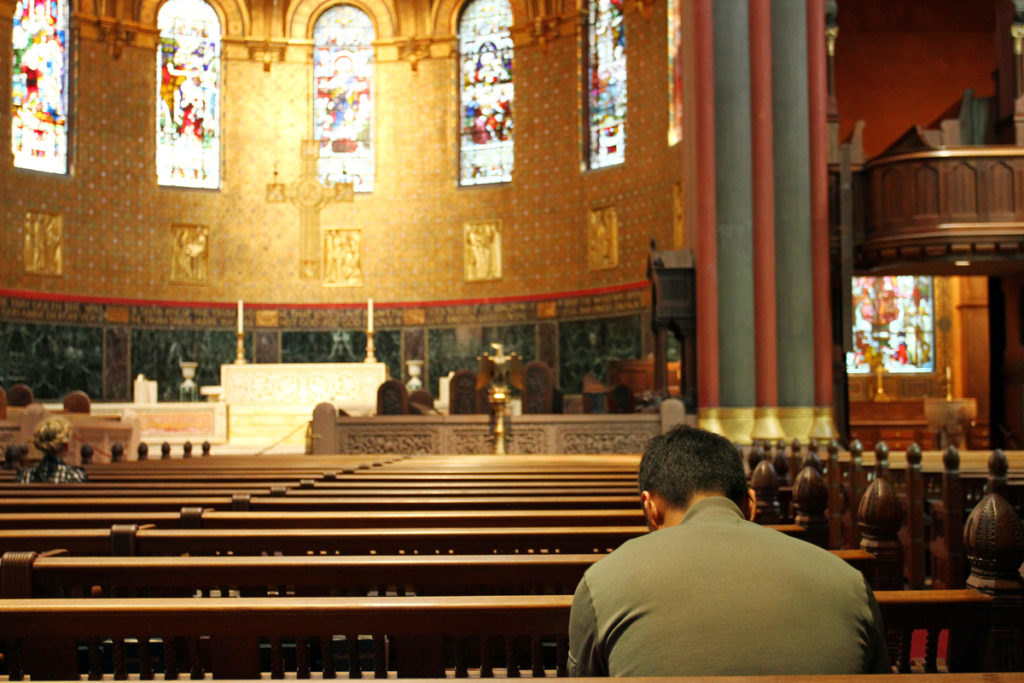
Churches Without Property

In 1998, I moved with my wife and my 3 year old son to Pembroke Pines, Florida.  I was sent there to start a new congregation in an area of Broward County that was located between I-75 and the Florida Everglades. 

It was an exciting time, but also a little frightening.  Would I have what it takes to knock on 5000 doors?  Would I really be able to gather enough people to form a worshipping community within six months?  Would this group of people be able to grow enough in numbers and giving to officially organize as a congregation?   

The answer to each of those questions was yes!  We held our first worship six months after I arrived in Pembroke Pines.  There were over 100 people there on the first Sunday.  Two years later, we voted to become a congregation, with over 100 members.  Not only that, but our congregation was multi-cultural, reflecting the area in which we were located.  Finally, we had lots of children and families.  Each week, over a third of the congregation was under the age of 18.

Everything was going as planned except for one thing.  We had been unable to purchase property on which to build a place to worship, hold Sunday School, adult Bible studies, and have an office.  On three occasions, we almost made it, but something fell through.  To this day, 25 years later, that congregation still has to rent space every Sunday to hold worship and Sunday School.

Why was it so difficult?  There were several factors.  Broward County was running out of land.  The cities had reached the edge of the Everglades and could go no further. What land remained was at a premium.  In addition, all of the land that remained was covered in muck.  To develop a piece of property, you had to “de-muck”, which means to scrape off all of the muck until you reached limestone. Then you had to re-fill the land with suitable soil for building.  At the same time, you had to set aside a third or more of the property for wetlands mitigation.

However, that’s not the primary reason it was so hard for a congregation to buy property.  The real reason that it was difficult was that the local municipalities, along with the county government, did not want any more churches.  You heard that right.  Churches were not wanted because they didn’t add to the tax base.  Furthermore, I suspect they were seen to be sectarian and divisive in a multi-ethnic and multi-religious community.  All of the things normally done by churches and synagogues could be done just as well by the schools, libraries and public parks, it was thought.

Why do I drag up the past?  Because I thought at the time, and still think today, that what happened to my congregation 25 years ago may be a preview of what will happen to many congregations in the 21st Century.  As church attendance drops, as more people identify as having no religious affiliation, and as the Church is seen more and more to be regressive and hateful, I expect government to seek to limit the freedom of the Church. One way to do that, among others, is through zoning and land use laws.  That’s what was used in Broward County.  Keep congregations from buying property and building facilities, and you limit their influence.

A further reason that I think this might be the future for many congregations is the growing denominational conflict which many of us have already experienced.  Over the past 25 years, Anglicans, Lutherans and Methodists, among others, have learned again and again that they may have to choose between faithfulness to the Word of God and owning property.   Sometimes, when that happens, there are enough people who have been “de-churched” to form a worshipping community.  Often, however, all that remains are Christians who have no church.  I have spoken to faithful Lutherans, who on being de-churched cannot find an orthodox Lutheran congregation within a reasonable driving distance. 

Unless we have a model of how to “do Church” without property and buildings, many faithful Lutherans will remain de-churched.  When I first faced this problem 25 years ago, there wasn’t a model available to me for doing mission without property and a building.  I had to do the best I could. 

At the end of the 20th Century, there were two primary models with which I was familiar.  The first was the pastor centered model.  The second was the program centered model.  Both of those depend on a congregation owning property and facilities.  In the pastor centered model, the congregation gathered each week for worship and fellowship.  The pastor did ministry to and for the members in the building owned by the congregation.  (Evangelism consisted of the pastor visiting individuals in the community.)

The program centered model also required property and facilities, but more than what was owned by a pastoral centered congregation.  It was through the varied programs that the congregation did ministry to its members and reached out to the unchurched.  The better the programs and the more varied, the more people could be reached.  More than one called pastor and multiple lay ministers were required to run the programs of the congregation.  In order for all of this to happen, however, adequate facilities were a must.

When I was a pastor developer, property was key to the viability of a new church.  Generally speaking, the pastor developer was expected to locate more than 5 acres for purchase.  That’s because the goal was for new congregations to grow beyond the pastor centered model to the program centered model.  You’ll need more than 5 acres to build the facilities to sustain a program centered congregation.  On more than one occasion, I heard of a mission congregation that was shut down because it couldn’t find enough land.  In spite of what was said about “the Church is not a building”, buildings were considered essential.

I fear that if the Lutheran Church in the 21st Century follows that model, it will be difficult to plant enough new congregations to reach the thousands of un-churched Lutherans in North America.  Even less will it be adequate to do the kind of mission that is required in our post-Christian society.   What models do we have for starting new congregations today?  What models do we have for a time when there are not enough pastors?  Not enough land?  Not enough facilities?  Do we simply say, “Starting a new congregation here is not a viable option?” 

Of equal importance is the question of how to grow a congregation.  What alternatives are there to the traditional Sunday School model, with accompanying Children’s and Youth programs?  Can a program model of ministry be replaced by a disciple making model?  Are there creative ways to raise up pastors and lay ministers in places where a pastor can’t be afforded?  We need answers to those questions if we want to do mission in the 21st Century. 


Prevailing Against the Gates

“Alderaan? I’m not going to Alderaan. I’ve got to get home. It’s late. I’m in for it as it is.”

Name that movie.  Name that scene.  Anyone with even a passing interest in the Star Wars franchise knows this one. It’s a pivotal moment.  Obi Wan asks Luke to come along, inviting him on a journey. It’s the beginning of Luke’s heroic journey; it’s a term penned by Professor Joseph Campbell who traced such stories through history, all of which followed a certain pattern and all leading to a central task: prevailing against darkness. 

George Lucas conferred with Campbell while writing the first three movies of the series.  Maybe that’s why most aficionados consider them the best of the nine. I find it ironic that when I first saw that movie, I looked like the kid being given a light saber.  Now I’m the white-haired old guy saying, “Hey, come along this way…” and for what it’s worth Luke’s first response is basically, “No thanks old man, I’ve got to get home and work on some evaporators.” In short order Luke experiences the loss of his aunt and uncle, crosses the threshold of Yes and with Obi Wan goes down into the valley of the spaceport.  Lucas knew what he was about.  The imagery was subtle, but followed the ancient pattern, down into the valley of the shadow of death with an outcome unknown. 

At our August board meeting of Lutheran CORE, our executive director Dennis Nelson led us through a bible study on the trip to Caesarea Philippi and the question, “Who do people say the son of man is?” Dennis offered a quick survey of Simon’s response, a look at the meaning of being given the keys and what that might entail, and then an insight into the gates, the gates that will not prevail against the rock. Then Jesus gave Simon his new identity, role, and assurance, “And I tell you, you are Peter, and on this rock I will build my church, and the gates of Hades will not prevail against it.”

The thing is that gates don’t take territory.  They don’t advance against an intruder.  They attempt to hold back an incursion.  Their role is to block that which is outside, like an opening in any good boundary regulates what can come in and what will go out.  Why can’t these gates prevail?  I sat there and soaked in that insight.  Of the many times I had explored that text, I asked who is Jesus in a pagan culture, what does it mean to be given the authority and therefore the power of the keys to bring life and the promise of forgiveness and eternal life?  What did it mean that Peter had a sufficiently robust relationship that he could endure the challenge of being compared to Satan and standing behind? And as our walk with Jesus becomes more personal, what does it mean that we find ourselves more open to being challenged in our brokenness and sin (sin that the Gospel may release)? And then Dennis brought up the idea of prevailing against the gates.  That invigorated a lively conversation around the table. 

What does it take to prevail against those gates, not merely hunker down and survive, but prevail?  Not in a militaristic sense, but certainly with a recognition that the church was founded to be movemental, to advance into new territory, to train and equip those who would bring the Gospel from Jerusalem, to Judea, to Samaria and all the ends of the earth.  How are we doing with that in our own contexts?  Were any of us trained to lead a movement?  Are we prevailing? Most of us were taught to preach, teach, bring comfort to the homebound and hospitalized, baptize the children, marry the silly romantics, bury the loved ones of the grieving. 

What if prevailing is more than that? In these times that often feel like we are traversing down into the valley of the shadow, what tools did we miss in seminary that we need for the journey? If you can find a copy of the book In The Valley of the Shadow by Hanns Lilje, it’s worth a read.  Lilje was a contemporary of Bonhoeffer—he survived his experience in the camps, later became a Bishop and wrote a catechism for adults.

Drawing from the disparate training of those on the Board, friends of CORE and others we will likely recruit, we are working on providing tasters on topics we didn’t learn in seminary.  During my brief stint as an assistant to the bishop in the ELCA’s Sierra Pacific Synod, I was called to manage first call theological education as part of a team for region 2.  Since I like to be data driven when it comes to providing training and support, I got all our first call pastors together, asked how it was going, and what do they think they missed?  I heard an earful.  So many things.  And that was twenty-five years ago. 

Since then, we’ve experienced the sexuality wars, the worship wars, the decline of Christianity numerically in the US, Covid, rising racial tensions, massive rejection of the faith by a younger generation (half of GenZ claiming to be agnostic or atheist)[i], family brokenness splashing out onto all the mediating structures of society including the church.  Etcetera. These tasters could be provided live on Zoom and recorded for later viewing.  We could interact via a social media platform as we figure out how to use what we’re learning.  Some of the topics being considered are:

  1. visionary leadership, the power of casting a vision and how to do so
  2. how to reach multiple cultures in our contexts including how to maintain core values amid an influx of new members
  3. how to be a church that can reach new people, a look at everything from Celtic models to multi-generational faith formation
  4. how to mobilize faith for mission and ministry within the congregation and in the mission field of their daily lives
  5. managing conflict and boundaries
  6. creating healthy staff teams
  7. creating leadership pipelines for disciples who know how to make disciples, for small groups and missional communities
  8. balancing personal life and strengthening the emotional side of pastoral life
  9. worship, preaching and leading transitions to discipling culture church
  10. developing a giving church and a church built on prayer

In the months ahead we will test a number of pilot offerings to see if we are on the right track.  If any of these topics are interesting to you, please let us know. If there are other areas of stress send us a note about that also.

The gates of hell shall not prevail “for lo! his doom is sure; one little word shall fell him.” All of us in leadership in the church heard the call, crossed into the journey, and now find ourselves on paths unknown to destinations unchartered.  May we do so while knowing that Jesus’ love is always supporting us, and his hand is guiding us. 


[i] https://www.aei.org/articles/perspective-why-even-secular-people-should-worry-about-gen-zs-lack-of-faith/#:~:text=Pew%20Research%20repeatedly%20found%20that,boomers%20and%20the%20Silent%20Generation.


“Here Am I. Send Me!”

Of all the voices in the world calling you to be this or do that with your life, how will you discern God’s call? While God calls persons into full or part time ministry, biblically God’s call has less to do with the job you get paid for and everything to do with the kingdom impact you were born to have on the world. Living in response to God’s call involves trusting the Lord in the midst of the darkness and waiting for the light to dawn. But how are we to discern God’s light, as opposed to the light of our own desires or our need to please others?

Isaiah’s Vision

Consider the prophet Isaiah, whose call story is found in Isaiah Chapter 6. “In the year that King Uzziah died I saw the Lord sitting upon a throne, high and lifted up; and the train of his robe filled the temple” (v. 1). The mention of King Uzziah’s death tells us something about Isaiah’s state of mind. Israel prospered under Uzziah when he listened to the Lord, but he eventually ignored God’s commands, and died in isolation as a leper. And Isaiah had reason to be discouraged. The king was dead, a new inexperienced ruler was on the throne, the nation was drifting into idolatry (again), and their enemies were growing stronger. Where was God in all of this?

“Above him [the Lord] stood the seraphim. Each had six wings: with two he covered his face, and with two he covered his feet, and with two he flew. And one called to another and said: ‘Holy, holy, holy is the Lord of hosts; the whole earth is full of his glory!’ And the foundations of the thresholds shook at the voice of him who called, and the house was filled with smoke” (v. 1-4).

God answered Isaiah’s question with a vision of heaven in which it became clear that while weak and sinful earthly rulers may die or be unseated, God reigns eternal. The angels proclaim His holiness, which extends throughout the world. The temple is shaken and filled with the smoke of God’s presence and power, echoing the pillar of cloud at Mt. Sinai, and the cloud of God’s glory that filled the temple (Exodus 13:21-22, 19:18 and I Kings 8:10-12).

Isaiah’s Reaction

In a time of uncertainty, God reveals Himself to Isaiah in His heavenly glory to confirm that He is King and reigns in heaven, regardless of what may be happening on earth. His sovereignty is never in question. This assurance is a prerequisite to hearing God’s call! And what is Isaiah’s reaction? And I said: “Woe is me! For I am lost; for I am a man of unclean lips, and I dwell in the midst of a people of unclean lips; for my eyes have seen the King, the Lord of hosts!” (v. 5).

Despite his intelligence, privilege, personal integrity and devout faith, Isaiah sees himself for who he really is, a sinful man among a sinful people. In the light of God’s glory, Isaiah’s sins and failings became evident… and damning. He was before God without a mediator, without any covering or sacrifice. And if the priests could only go into the holy of holies once a year, and only after making sacrifices for themselves and the people so they would not fall dead, there was no chance of survival for Isaiah, who was in God’s presence with zero preparation.

God’s Response

In response to this realization, the Lord acts. “Then one of the seraphim flew to me, having in his hand a burning coal that he had taken with tongs from the altar. And he touched my mouth and said: “Behold, this has touched your lips; your guilt is taken away, and your sin atoned for” (v. 6-7). The altar was the place in the temple where the people’s sins were dealt with through animal sacrifice, foreshadowing the sacrifice of Jesus’ death on Calvary as the Lamb of God who takes away the sins of the world.  The angel takes a burning coal to purify Isaiah’s lips, which were the source of his sins and the instrument of his impending ministry. As a result of the angel’s action, Isaiah’s guilt is removed, his sins are forgiven, the source of his fear is gone, and he is fit for service.

The Call to Ministry

“Then I heard the voice of the Lord saying, ‘Whom shall I send? And who will go for us?’ And I said, “Here I am. Send me!” (v. 8). God revealed Himself to Isaiah for the purpose of preparing him for ministry. Prior to his cleansing, Isaiah heard only the angels proclaiming God’s holiness, and of course, the accusing voice of his own conscience. But now he can hear the voice of the Triune God speaking to the council of angels, asking, “Who will be the messenger to my people? Who will go for us?” And this time Isaiah answers without hesitation or reluctance, “Here Am I. Send me.” The assurance of God’s absolution and a clear conscience are evident in Isaiah’s desire to answer the call. And from his experience we can draw three conclusions.

1. Worship precedes service – humbly seeking the Lord in worship is the first step in determining the what, where, when, why, and how of God’s calling in a particular season of your life. In Scripture, God’s call sometimes came through a vision, dream, or some other supernatural phenomenon. But most experience an urging of the Holy Spirit to serve in a particular way or to use a particular gift of the Spirit for the common good.

2. Self-awareness precedes action – understanding one’s current condition and circumstances will clarify what you lack that God must provide before he can use you for his intended purpose.

3. Formation precedes confirmation – formation refers to the process of preparation one undergoes in order to carry out their ministry/calling. But formation is not the same as confirmation. Some think that if you have a Bible college or seminary degree or if you have a special skill in service or leadership, you automatically qualify for a particular ministry. But no one in the church is self-appointed. God always uses the Church to confirm a person to ministry after a time of formational preparation, whether lay or ordained.

I pray that in this season of life, as you seek the Lord, His call to you will become clear, as it did for Isaiah. And that you will respond as he did, “Here am I. send me!”

Pr. Jeff Morlock is on the staff of the North American Lutheran Church and is Director of Vocational Discernment for the North American Lutheran Seminary. He may be reached at
[email protected]


The Creeds Don’t “Sparkle”

Note from our Executive Director: Many thanks to Kevin Haug, ELCA pastor in Texas, for his article about the Sparkle creed.  This so-called “creed” has received a lot of attention and stimulated a lot of discussion since its recent use during a worship service in an ELCA congregation in Minnesota.  We should all be alarmed over the way in which this statement rejects Biblical teaching and orthodox theology in its promoting the LGBTQ agenda and transgender ideology.  We are saddened but not surprised as we read of many ELCA pastors who are praising it as a way to connect the Christian faith with life today.  We are also saddened but not surprised by the total silence of ELCA leaders about it. 

“Pastor, what are we going to do about this?”

Those words were spoken by one of my octogenarians after she heard two news stories about the “Sparkle creed,” a statement that received national attention because of its use at an ELCA Lutheran Church in Minnesota.  The congregation recited it at worship, posted the video online, and it went viral.

The “Sparkle creed” has actually been around for a year or two, but it was not until conservative news sites and blogs discovered it that it caused a bit of an uproar, and that uproar is not without merit.  However, care needs to be taken when addressing this issue. I will attempt to show why.

First, let me define creed as a statement of belief.

In a very real way, everyone has a creed of some sort.  Individuals have creeds. Organizations have creeds. Individual congregations have creeds.  In fact, many biblical scholars say that the first creed was quite simple: Jesus is Lord. Those three words actually led to the death of Christians who would not say the Roman creed: Caesar is Lord.  

Because everyone has a creed, one could argue that having a creed is actually a neutral concept.  People believe all sorts of things. That they believe them is undisputed and neutral, but what they believe can be problematic and either good or bad. For instance, if I believe that all human beings are endowed by their Creator with fundamental rights, then that is a creedal statement.  And I would happily argue that it is a good creedal statement for various reasons.  Someone could hold a different position: that human beings are not endowed with rights from a Creator, but that governments decide what rights a person should or should not have. I would argue that this isn’t a very good position to take, but that doesn’t prevent some nations and people from holding it.  

To change positions literally requires a conversion process as many, if not most, creedal beliefs are actually statements of faith not statements of science.  For instance, science is practiced by using the scientific method: state a hypothesis; test and measure to see if the hypothesis holds water; formulate a theory; test the theory repeatedly.  Is the scientific method a true way of getting knowledge? Well, you have to assume that it is.  You have to trust that it is.  You cannot test the scientific method by using the scientific method.  Philosophers call this circular reasoning. Trusting that the scientific method is an accurate way of obtaining knowledge is a creedal belief. It is a deep, foundational belief, but it is a belief none-the-less, and one does not change those sorts of beliefs easily.

Which brings us to the Creeds of the Church, and I am intentionally capitalizing the letter C on both of those words. There is a reason for this as I shall get into shortly.

Within the Christian Church, there are three, recognized, orthodox Creeds: the Apostles’ Creed, the Nicene Creed, and the Athanasian Creed, and what you need to realize about these statements of faith is this: these Creeds were recognized by the whole Church as true affirmations of the Christian faith.  They were based in Scripture. They were developed over time or argued over or carefully thought through. They were not put together in a pastor’s office to make a particular group or segment of society feel welcomed or accepted.

In general, they were written to stomp out heresy. They were written to unify a divided Church. They were written to solidify and codify what the Church believed about God the Father, Christ the Son, and God the Holy Spirit.  And as such, they are not to be trifled with.

Imagine for a minute if you will, gathering with a group of Christians circa 250 A.D. You are in hiding because Christianity is still not a recognized religion of the Roman Empire. It is the Easter Vigil, the time that it has become traditional for converts to be baptized into the faith. As the baptismal liturgy begins, the presider looks into the eyes of the converts. He begins addressing them and asks them three questions: Do you believe in God the Father? Do you believe in God the Son? Do you believe in God the Holy Spirit? And the converts begin reciting what they have been taught about who God is; who Jesus is; and who the Holy Spirit is. These statements have come together over decades of persecution and trial. Speaking them would immediately set these converts apart from the dominant culture and could lead to arrest and persecution.  Such is the nature of the Apostles’ Creed.

Or consider a church divided by various sects all claiming to represent the one true faith. Yet, those beliefs are contradictory at times. Some are not grounded in scripture. Some are off the charts. What does it mean to be a Christian? What are the foundational beliefs? Is this world truly, totally evil? Does only the spiritual count? Was Jesus indeed fully human and fully divine or a really good human being only adopted by God and infused with the divine Spirit?  What do you Christians truly believe? And bishops from far and wide gather to hammer such things out.  They consult deeply with the scriptures; argue their points vehemently and passionately; and put together a statement of faith which declares: this is it.  These are the non-negotiables. It is accepted by the church council and has stood the test of time for centuries. Such is the nature of the Nicene Creed.

The “Sparkle creed” shares none of this history. It was written for entirely different reasons and has not even come close to being vetted by the whole Christian Church on earth.  In fact, the majority of the Christian Church on earth would outright reject it. 

Therefore, it follows, that it has no standing to replace the Creeds in worship.

I mean: if someone wants to say that they adhere to the “Sparkle creed,” then they can personally say that they believe exactly what is in that statement. If a congregation wants to go so far as to use this creed in worship, then they are free to do so, but I strongly believe it should be introduced as a statement of that individual congregation, not of the Christian Church–it is not “the faith of the Church, the faith in which we baptize.” 

For to use it in such a manner is to actually separate one’s self and congregation from the global Church.  It is to become myopic and rather self-centered. Arguably, it is creating one’s own personal faith and religion—dare I say one’s own god.

And yes, I am quite aware that I belong to a denomination whose founder separated himself and then many congregations from the larger Church body of the time. The irony is not lost on me; however, Luther didn’t mess with the Creeds.  He affirmed them and what they stood for repeatedly. He didn’t tinker with the Creeds or try to change them for he never wanted to split with the Church of Rome.  These statements of belief were not up for negotiation or reformation. They were good “as is.”

They still are. They are meant to hold us together despite our disagreements on secondary issues. Trying to put “sparkle” in them only causes more division.

Leave the Creeds alone.


Caring Christian Faith Communities: Needed Now More Than Ever

As Americans we are living in a time of increasing emotional despair.  And this crisis presents the Body of Christ with tremendous challenges as local churches consider how they might respond.

In the past, when I heard people complain about the state of American society and the level of social upheaval, I would respond, “But it’s not as bad as it was back in the late 1960’s and early 1970’s.  Well I no longer say that.  I think the state of American society, in 2023, is now worse.  I have never, in my lifetime, seen as many studies and statistics pointing to widespread depression and despair as I have read about in just the last two years.  Some examples:

  1. The Centers for Disease Control and Prevention (CDC) has been conducting major surveys of high school students every other year since 2011.  The most recent survey—conducted in 2021 with the findings released in 2022—discovered an “overwhelming wave of violence and trauma and never-before-seen levels of hopelessness and suicidal thoughts among high schools students in the United States.”  This trend has been particularly alarming among high school girls.  “Almost 60% of female students experienced persistent feelings of sadness or hopelessness during the past year, and nearly 25% made a suicide plan.”  This represents a 60% increase when compared to the survey results back in 2011.
  2. Nicholas Kristoff, a writer with the New York Times, recently wrote, “Americans die from deaths of despair—drugs, alcohol and suicide—at a rate of more than 250,000 people per year, and the number of walking wounded is far greater.”
  3. Suicide-related visits to pediatric emergency rooms in the United States—between 2011 and 2020—increased 500% (five-fold) among children, teens and young adults. (New York Times, 5-1-2023)

Back in 1920 the poet William Butler Yeats wrote his poem, The Second Coming.  His appraisal of the world of his day, no doubt shared by many of his peers shortly after the conclusion of the First World War, was incredibly stark.  “Things fall apart; the center cannot hold, the best lack all conviction, while the worst are full of passionate intensity.”  Call me an alarmist, but I believe these words capture how a great many Americans—on both sides of the (political) aisle—view the current state of American society.    

There are undoubtedly many factors contributing to these startling statistics.  Perhaps the most frequent cause cited is the increased use of social media; especially among young people in general, and young women and girls in particular.  There is also the on-going decline in the number of two-parent households; increased rates of addiction; and the increasing numbers of Americans living alone.  And I would add the increasing secularization of our society and culture.

So what can the local church do to respond to all this despair?  In my opinion congregations can potentially make a significant and positive difference.  How?  By reaching out to some of the “walking wounded” in their local communities and introducing them to the blessings of being part of a caring Christian fellowship.  And, this introduction will typically happen one caring relationship at a time.  

However, there are at least two challenges faced by a great many local churches which need to be addressed.  One challenge is that too many congregations are just as polarized and conflicted as our surrounding culture.  We must not allow our churches to be characterized by discord and disunity.  It is incredibly difficult to witness to the love of Christ if this love is not evident within our congregations due to internal conflict.

A second challenge is that too many of our congregations have become immobilized by and fixated on their institutional decline.  This might be apparent due to decreasing worship attendance, or reduced financial giving, or perhaps their inability to find a new pastor during a prolonged vacancy.

Granted, our society is becoming increasingly secular, and the percentage of Americans identifying as “religious” has been decreasing.  However, more and more Americans—in their despair—are  recognizing their need to be a part of a loving and supportive community.  And they understand that this “community” needs to be in-person, not online.

Jessica Grose, a columnist for the New York Times, recently wrote an article entitled, “What Churches Offer That ‘Nones’ Still Long For”.  This article just appeared in the paper’s 6-28-2023 issue.  Keep in mind that Ms. Grose is a “none” of a non-observant Jewish background.  This was her final article in a five-article series on the increasing number of Americans leaving organized religion.  She wrote, “The one aspect of religion in America that I unquestionably see as an overall positive for society is the ready-made supportive community that churchgoers can access.”  One of the de-churched “nones” whom Jessica interviewed for her articles said the following: “I was raised Pentecostal and went to church three or more times a week, so I desperately miss the community.  It was where my friendships came from.  I have very few friends now.”  I would dare to say that hundreds of thousands of dechurched Lutherans probably have similar stories.  At the end of this article Ms. Grose wrote, “Almost everyone needs community to flourish.”  On a personal note, my wife and I, as we returned to more regular in-person worship attendance after the pandemic, realized how profoundly we had missed the worship and fellowship of our home congregation.

Writer Kirsten Sanders, in the recent March/2023 issue of Christianity Today, did an excellent job of describing the kind of Christian community which could reach the “walking wounded” of 2023.  “What makes the church (unique) is its knowledge of itself as called by God to be his representative on the earth, to be marked by unwieldy and inconvenient practices like forgiveness, hospitality, humility, and repentance.  It is marked in such a way by its common gathering, in baptism and Communion, remembering the Lord’s death and proclaiming it until he comes…When the church becomes preoccupied with defending itself to the world, it eventually becomes incoherent.  The only way to be a church is to speak the peculiar language of peace, of forgiveness, of repentance and resurrection.”

One of my favorite New Testament passages that I believe presents a vision of God’s love and Christian community is Ephesians 3:16-19.  Paul writes, “I pray that out of (the Father’s) glorious riches he may strengthen you with power through his Spirit in your inner being, so that Christ may dwell in your hearts through faith.  And I pray that you, being rooted and established in love, may have the power, together with all the saints, to grasp how wide and long and deep is the love of Christ, and to know this love that surpasses knowledge—that you may be filled to the measure of all the fullness of God.”

Don Brandt

Congregations in Transition /Congregational Lay-leadership Initiative

[email protected]


Dead Faith

Don’t play with dead fish! Mom said don’t bring it home thinking we’ll eat it! A dead fish is useless and worthless.

What are we to do with dead faith? Since a fish is a symbol for a Christian, maybe we can see how a dead faith isn’t much different from a dead fish.

Why do we declare a dead fish dead?  Most obvious is that it doesn’t move. Ever poke someone who was still to see if they were still alive? I try poking motionless Christians to see if their faith is alive. They don’t like it.

If our faith has no action, is it faith? James declares that faith with no action is dead (James 2:17). A living faith moves us: moves us to worship and praise our living God, moves us to pray and read his word, moves us to share Christ and bless others for His sake.  A faith without the life-giving Spirit is dead (James 2:26). And a dead faith is as useless as a dead fish because it is not living the aliveness that God intends (James 2:20).

(A faith that is about making ourselves feel good about our righteousness is not faith in Christ. I will cover that in a future article.)

If our motionless faith is just words; an empty lifeless confession that we are a Christian but no swimming in life as a Christian, then our faith is dead. If our faith is just the stripes of ancestors and heritage from days gone by but does not inspire fresh living today, then, well, even dead fish have stripes. Knowing facts about God or Christ is like a dead fish skeleton. You can see the outline, but a skeleton alone does not manifest life. A static dead faith isn’t just infertile and lifeless. Not having a living faith means we lack life-changing love, but rather are full of worry, obligation and tedium.

Why bother having a faith that is dead? Should a dead faith Christian just become an atheist to become dead to God all together?  Should we just drop the farce of faith? NO!

Embrace your dead faith. Yes, you are dead in your faith and also dead in your sins where you stand. But God excels at dealing with the dead. “But because of his great love for us, God, who is rich in mercy, made us alive with Christ even when we were dead in transgressions—it is by grace you have been saved.”(Eph 2:4–5)

You have every privilege as a dead fish Christian to call upon God to make your faith alive. You are baptized. You are baptized into the death of Christ so you can be raised to a new life in Christ. (Rom 6:3-6)

Are you content to be a motionless, dead fish Christian or will you pray for your faith? God promises to give you life. If the Spirit of him who raised Jesus from the dead dwells in you, he who raised Christ from the dead will give life to your mortal bodies also through his Spirit that dwells in you.” (Rom 8:11)

So, I invite you to drag your dead faith butt to worship. Sit there in the pew in your grave clothes of this dull, exhausting existence to hear the Word of God. Dead fish Lazarus didn’t come out of the tomb patting himself on the back but rose up because Christ spoke to him (John 11:43-44).  Christ calls you to be alive with faith.

“He died for us so that, whether we are awake or asleep, we may live together with him.” (1 Th 5:10)

Your servant in his Word, Pastor Douglas 


Pockets of Hope

When I think of Baltimore, I often think of my early childhood home with a large magnolia tree in the front yard and a tall, hemlock pine in the back, where my siblings and I used to climb and play amongst the branches to our hearts content. I think of the cookies my sisters and I would sell in the neighborhood without supervision, pulling our bright red Flyer wagon full of a variety of cookies behind us. I was only 6 when we moved away, but I remember, even then, after being robbed multiple times and my brother being held up with a gun when he was 10 for his bike, that I felt fear.

It wasn’t until I was older that I began to hear negative statistics about Baltimore and I came to see my siblings’ and my childhood experiences there in a new light. Amidst all the negative media coverage, it’s easy to believe that Baltimore continues in a downward spiral and there isn’t much hope.

This year, from the first day of City Mission, I had the phrase “It’s not a sprint, it’s a marathon” on my heart. As an athlete, I’ve always preferred sprinting over distance running and that’s true in other aspects of my life as well. The Lord has taught me a lot of patience through the years and, through seasons of burn out, He’s taught me to pace myself more and rely on Him instead of trying to make change happen all on my own. So when this impression came to my heart, I didn’t question it. Looking back now, it feels like a gift from the Holy Spirit because He knew how much I needed that reminder.

I’ll be honest…It felt heavy seeing a woman come through a food pantry with her face apparently beaten and her eyes red and to watch as they called a volunteer over because she couldn’t walk through by herself. Then overhearing another volunteer reminding her “I’m only a phone call away, okay? One phone call and we can get you out of there.” It feels heavy when you walk into a tent city, hidden from the road, and see kids running around, documented or not, with people passed out on the ground (you hope it’s not worse than that) and you learn that some of these individuals used to be businessmen and women, lawyers, police officers, etc. – people who hadn’t spent all of their lives at the bottom. It feels heavy knowing that a stone’s throw from one of the churches we partner with is the sex trafficking hub of the city. It feels heavy when a woman graduates from a recovery program and dies after running into someone she once did drugs with; one last hit and she was gone… just as she was beginning to rebuild her life.

One evening someone in the group shared that these churches, ministries, and organizations that we partner with in Baltimore are like “Pockets of Hope.” It felt like the perfect description. That’s truly what these places are.

Because of these “Pockets of Hope,” we also experienced joy and immense encouragement, not just heaviness. We got to see how much good happens on a daily basis to help people in need, some desperately so. One of these places, after operating solely as a food pantry for a while, decided to expand and offer a deeper level of care through education, job resources, clothing distribution and more. We toured a large warehouse that is going to be an additional extension of their non-profit organization. It is so exciting to see their vision for the future and to think of how many lives will be touched there.

It’s a joy working together to be the hands and feet of Christ. Going out as a team and partnering with those who are already aware of needs in the city and who are actively giving of their time and resources is both encouraging and helpful to us as we try to make the most of our time there. These “Pockets of Hope” are essential to the mission there. Without them, not only would we become discouraged and overwhelmed, we would be in over our heads. It’s in these places that we’re given a tangible reminder that God truly is at work—whether we see it or not. We’re not there to fix everything, we’re not there to jump in and take over. We’re there to walk alongside, to plant seeds, to water seeds, to give a word of encouragement, a smile, or a hug.

The phrase I mentioned earlier, “it’s not a sprint, it’s a marathon” served as a subtle reminder to me to let go and free my heart from the burden of expectation of wanting to see certain results and change happen, in order to embrace being a part of what God is doing right in front of me. I really felt free to do that.

As I’ve continued to think about this phrase, I’ve realized how much it really applies to all of life and ministry as a whole. If we’re in this for the long haul, pacing ourselves and living out our callings through the work of the Holy Spirit within us, is essential. Our hearts were never meant to carry the burdens of the whole world. Many of us are often weighed down from the burden of too much news from all over the world, to the point where our discouragement becomes immobilization and we end up doing nothing. It’s just too much.

In Matthew 11:28-30, Jesus says “Come to me, all you who are weary and burdened, and I will give you rest. Take my yoke upon you and learn from me, for I am gentle and humble in heart, and you will find rest for your souls.For my yoke is easy and my burden is light.” My prayer is that we would take this to heart. When we give those burdens to God, we free ourselves up to be a vessel for good instead of being so consumed with worry and anxiety that we can’t be effective at all. When we leave it in God’s hands, it frees us up to allow His love, joy, hope, peace and other fruits of the spirit to take up residence in our hearts and flow out from there. That is such an essential part of being the hands and feet of Christ because those are the things that point others to Christ – the fruit of His spirit within us.

We go, we speak, we care for others and act as His hands and feet, we love, we encourage, we speak the truth… and then we need to let God do the work of the heart. The Holy Spirit changes hearts, not us.

It is such an honor to partner with these “Pockets of Hope” in Baltimore – from recovery programs, to food distribution centers and churches in the heart of Baltimore that are out there every day reaching out to the lost. We are so encouraged and excited by what God is doing in this city and are blessed to be a part of it, even in a small way.

Mother Teresa once said, “The biggest disease today is not leprosy or tuberculosis, but rather the feeling of being unwanted, uncared for and deserted by everybody. The greatest evil is the lack of love and charity, the terrible indifference toward one’s neighbor who lives at the roadside, assaulted by exploitation, corruption, poverty and disease.” Her response to that? “Do small things with great love.”

That “small thing” is significant and may have a bigger impact than you or I could ever imagine.

“Now all glory to God, who is able, through His mighty power at work within us, to do infinitely more than we might ask or think.” -Ephesians 3:20

Images were provided by Teresa Dubyoski.


Feed My Sheep

I have appreciated Don Brandt’s wisdom and leadership in Lutheran renewal through the years, and I welcomed his article in last month’s CORE Voice. He accurately diagnoses the biggest single problem that runs through all of our Lutheran denominations in North America — our desperate shortage of pastors. And I almost agree with his proposed solution.

Don points out that even when we had more than enough pastors, there were not nearly enough willing to serve in smaller rural and inner-city settings. He notes that these congregations became training locations for pastors who would move on in a few years to a larger church. This does not provide the stability of leadership a congregation needs to be effective in mission and outreach.

I would add that in our time even larger congregations are having difficulty finding ordained pastors. In my North American Lutheran Church, we were told at our pastors’ convocation that some congregations have had profiles posted for a year or more but have received zero interest from pastoral candidates. The ELCA synod I had been a part of recently notified its congregations that because 40% of its churches lack either a called or interim pastor, they no longer have enough supply pastors or authorized lay leaders to provide leadership for these congregations every Sunday.

As an NALC dean, I tell congregations that the total cost of having a pastor (not just the compensation) will approach or involve six figures. Many pastors now serving “full-time” can only do so because their spouses provide insurances and other benefits. Retirements are outpacing ordinations. I don’t think we in the NALC are alone in these challenges.

So far Don and I are on the same page. And I fully agree that what we have been doing is not going to provide the pastors we need to lead our congregations in mission in the 21st century. Not only do we not have people who are in a position to take three or four years out of their lives to pursue MDiv degrees (even online), but many of our congregations cannot afford the salaries required to cover living expenses plus student loan debt (which can easily amount to $50,000 for seminary alone and at least as much for college).

My quibbles with Don are two-fold.

First, and probably minor, he repeats the common misconception that Luther taught something called “the priesthood of all believers.” For all that we have heard this repeated from lecterns and pulpits, Luther taught no such thing. It is actually a 19th Century Calvinist concept. Luther did teach a wonderful understanding of Christian vocation (see the oldie but goodie by Gustav Wingren, Luther on Vocation, Muhlenberg Press, 1957). Whereas the medieval church taught that church vocations were “religious” but others were not, Luther understood that all Christians exercise our Baptism in the world as we love God by serving our neighbors, and that we do so through our variety of callings. These grow out of the Fourth Commandment that establishes the orders and structures of society. Thereby all legitimate callings can be “religious,” as long as Christians engage in them out of love for God and neighbor.

Luther also taught that because the bishops refused to ordain pastors for the churches of the Reformation, the princes and magistrates should claim the authority of their Baptism and ordain pastors to serve these churches. This was not a free-for-all. Luther called on legitimate authorities to meet the need, and to do so by ordaining pastors to serve these congregations. More on that later.

In the Augsburg Confession, Article V makes it clear that the “Holy Ministry” is of divine origin, and that it consists in preaching the Gospel and administering the sacraments. Article XIV insists that nobody is permitted to preach or teach publicly in the churches or administer the sacraments without a “proper call” (rite vocatus in Latin, which in the context means “ordained”). The sad reality is that none of our Lutheran church bodies are observing Article XIV today.

As I see it, the problem is the professionalization of the clergy, which took hold in the 1950’s as pastors wanted to have the social status of lawyers, doctors, and others. The Bachelor of Divinity degree was changed to a Masters of Divinity with absolutely no change in the program (a similar thing happened to law degrees), and spiritual qualifications for ministry were largely replaced by academic ones.

It didn’t help that the primary requirement to teach in our seminaries was to have an earned PhD degree and not vital parish ministry experience. And with few exceptions PhD degrees could only be secured in religion departments of secular universities, which had no accountability to the “faith once delivered to the saints.”

Don proposes that the solution is to have lay-led congregations. My counter-proposal is that we ordain those people in congregations who have the gifts and call for ministry, which includes seeking realistic and reasonable ways to equip them to serve faithfully as pastors to God’s people in those places.

Ordination historically is not an academic certification. It involves the Body of Christ discerning God’s call on a person, and then gathering to lay hands on that person and pray for them to receive the gifts they need to serve God’s people faithfully. Does this communicate some sort of “indelible character”? I do not believe that ordination makes a person spiritually superior or gives them some special powers, but neither dare I say that these prayers are inconsequential. Paul called on Timothy to “stir into flame” the gift he had received through the laying on of hands (2 Timothy 1:6).

I am not arguing for dumb pastors (although the smart-aleck in me might wonder whether the academic captivity of the churches has alleviated this concern). We were ordaining pastors in North American Lutheranism for 125 years before we had a seminary. Their training and preparation was through mentorship. There is no reason we couldn’t have more than one clergy roster, or that we could not establish a system of ongoing mentoring for those unable to pursue the academic track.

I wish we could fill all our pulpits with faithful pastors formed by four-year residential programs in our seminaries. But as is so often the case, the perfect can be the enemy of the good. We need pastors in many of our congregations right now, not ten or fifteen years from now, and simply working harder at what has not been working fits the classic definition of insanity, if we imagine the results will be any different.

To return to Luther: I believe on the basis of the Augsburg Confession that all God’s people deserve and need to be fed with the Word and the Sacraments from properly ordained persons, and that the most important single task of any church judicatory is to provide such pastors for all its congregations. If the judicatory insists on procedures that effectively starve the people in congregations spiritually by denying them Word and Sacrament, perhaps the congregation should adopt Luther’s example and, after prayerful discernment and conversation, ordain people within their own fellowship to serve them. I view this as Luther viewed his proposal for the princes and magistrates to ordain as a “last resort” sort of option, and I am sure judicatory officials will not be pleased if congregations take matters into their own hands. The solution is for the officials to find creative ways to feed the lambs of our Lord’s flock with the Bread of Life. I suspect that here Don and I come very, very close to agreeing. Such a congregation needs to be prepared to accept discipline from their judicatories. [Here is where LCMC with its contract pastors offers a viable option, although I believe they need policies in place to protect people from abusive clergy.]

God has established the Holy Ministry of Word and Sacrament, and He has given us the task of determining how to structure and organize it in this time and place. The structuring of the Office of the Ministry has changed many times throughout history, and needs to change today. I fully agree with Don that what we are doing has not served us well for many decades and will become an even greater problem as time passes.

The answer is to re-evaluate how we discern that God has called a person to Holy Ministry. Once we make that discernment, after prayer and serious conversation, the solution is to ordain the person. St. Peter would not be acceptable as a pastor in most of our Lutheran churches today. We need to look at God’s call and gifts and not merely at academic degrees to determine whom God has chosen to preach the Gospel and administer the sacraments in our congregations.

To all decision-makers in our church bodies, our Lord says: “Feed my sheep.”


The Awaken Project Offers a Gap Year Program

Introduction by Dennis D. Nelson: In this issue we will be featuring The Awaken Project (TAP), a nonprofit organization housed on the campus of Mount Carmel Ministries in Alexandria, Minnesota.

The last (January 2023) issue of CORE Voice includes the first in a series of articles about residential discipleship ministries for young adults.  Here is a link to the article about Faith Greenhouse, which is affiliated with Faith Lutheran Church in Hutchinson, Minnesota.

The Awaken Project (TAP), a nonprofit organization housed on campus at Mount Carmel Ministries in Alexandria, Minnesota, is pleased to continue to offer an eight month/two semester gap year program for students who are interested in a full or part time career in ministry, seeking to study the Bible on a collegiate level in community, and travel across the United States while engaging with practical ministry opportunities.

Our partnership with Mount Carmel is one of the most crucial aspects of our program. Drawing on Mount Carmel’s rich history within the Lutheran Bible Institute, The Awaken Project seeks to draw upon the same spirit that spurred on so many to attend LBI and cultivate that wonderful community for many decades. We believe that young adults who are committed to living, serving, learning, and growing together under the cross are an immensely valuable part of the Body of Christ, and we are committed to providing young adults the opportunity to experience this transformational community life.

The fall semester is primarily Bible classes, taught by independent instructors who join us for a week at a time and teach one subject for the duration of the week. Other rhythms of the fall include a morning devotional centered around the Moravian Daily Texts, weekly community meals, weekly spiritual formation sessions with mentors, and hangouts with the residential community. The spring semester is when most of our travel occurs. We partner with Quake Events, a national youth conference circuit of events geared toward middle and high school students. Our students attend these events throughout the spring and lead in relational ministry, workshops, and production assistance.

We strive to sponsor a program that sees all students grow in relationship with one another, teachers, mentors, community members, and our Lord, Jesus Christ. A recent alumna of our program, Courtney Corrente, has described her time with TAP as an answer to prayer that she never thought would come to pass, but now can hardly imagine her life without the community she’s found through TAP’s gap year program. After completing her year with TAP, she was hired onto Mount Carmel’s staff as their Communications Coordinator, which has allowed her to gain immediate experience in her fields of study (strategic communications), continue to maintain the community she gained last year, and invest back into this year’s cohort of TAP students.

I am expecting that there will be plenty more stories like Courtney’s over the years of TAP’s gap year program. If you know anyone who has been longing for a community to do life with, who seeks high quality and affordable Biblical education, and who has an itch to travel and serve, The Awaken Project’s gap year program can be a wonderful opportunity. Please contact myself, Steven Wagner, at [email protected] if you have any questions or know someone who may benefit immensely from this program.

If you feel led to contribute a tax deductible donation to The Awaken Project, gifts can be sent to The Awaken Project at 800 Mount Carmel Drive NE, Alexandria, Minnesota, 56308.


Resisting God’s Call

When God calls a person to a specific task or ministry, resistance is often the first response of the called. Jeremiah claimed that he was too young. Gideon feared he was too weak. Isaiah considered himself too sinful, “a man of unclean lips” (Isaiah 6:5 ESV). This resistance to God’s call comes from two sources. The first is a belief that we know better than God what will be required, and a need to explain to the Almighty why we are not qualified.

Moses had a loving family and a quiet life as a shepherd when God’s call came to him in “mid-career,” as we might say. From a burning bush came God’s vocational call that Moses should go confront Pharoah and demand the immediate release of the Israelites from bondage in Egypt. It’s not unusual for God to ask things of His children that seem beyond our competency. But it turns out that the old trite saying is true: “God doesn’t call the equipped, He equips the called.”

In Moses, we might recognize some of the excuses that we ourselves have used for resisting God’s call when it has become clear. “‘Then Moses said to God, “If I come to the people of Israel and say to them, ‘The God of your fathers has sent me to you,’ and they ask me, ‘What is his name?’ what shall I say to them?’” (Exodus 3:13 ESV) One common excuse for resisting God’s call is that I don’t have all the answers. This was my greatest fear when the Lord first called me to study for ordained ministry. I was afraid of not being able to answer every question that my future flock(s) would pose. In Moses’ case, his years as a shepherd had not prepared him to stand up to the wisdom and might of a powerful political leader like Pharoah.

However, what Moses failed to recognize was that he was not the most important factor in God’s plan. When we wrongly perceive that God’s plan hinges on our abilities, we will fear failure. We will fear embarrassment and the judgment of others. But the Lord God is not impeded by such anxiety. When Moses asks, “What should I tell them?” God replies, “I AM WHO I AM. Say to the people of Israel: I AM has sent me to you” (Exodus 3:13-14 ESV).

Moses had to learn that his call had nothing to do with his own ability and everything to do with God’s sovereignty! As a pastor, when I consider the responsibility of proclaiming the Gospel and teaching God’s Word, I often feel unworthy and incompetent. But when I do these things in the awareness that the I AM of the Scriptures is speaking through me, I can be confident that His Word does what it says and accomplishes every purpose for which He sends it.

The second excuse that many of us have in common with Moses is the fear that people won’t accept me. Moses had a past. Having fled Egypt as an outlaw and a murderer, he could be perceived as not only having broken God’s commandment, but as abandoning his own people.  His profound sense of inadequacy led Moses to object, “But behold, they will not believe me or listen to my voice, for they will say, ‘The Lord did not appear to you.’” (Exodus 4:1 ESV).

Fear clouds our perspective and makes us dwell on the worst possible outcomes. Fear keeps the focus on the self rather than on the Lord. It magnifies our weakness and underestimates God’s power. Thus, God gave Moses two practical demonstrations of His power, first by turning Moses’ staff into a snake, and then back again into a staff; and second, by making Moses’ hand wither, and then restoring it again. Through these signs, the Lord bolstered Moses’ confidence that God Himself would do the work. Similarly, when God chooses you for a particular task or ministry, He will provide all that is necessary and show you the next step you are to take.

Moses, still unconvinced about God’s plan, offers a final critique: his speech impediment would obviously make him ineligible to serve, since confronting Pharoah would require public speaking. The excuse here is that my deficiencies are insurmountable. But God has a different perspective. “Who has made man’s mouth? Who makes him mute, or deaf, or seeing, or blind? Is it not I, the Lord? Now therefore go, and I will be with your mouth and teach you what you shall speak.” (Exodus 4:11-12 ESV).

In the light of God’s design for our lives, even disabilities are overcome and transformed. By now, Moses was running out of excuses, so in one last effort to avoid his assignment, he blurts out, “Oh, my Lord, please send someone else.”  But God didn’t let Moses off the hook. Instead, he called Moses’ brother Aaron to be his helper and spokesperson. The Lord doesn’t need anything “special” from you or me. He definitely doesn’t need our advice. But it’s easy to get so caught up in our excuses that we miss the entire point of God’s call. The Lord wants to accomplish something significant through you by doing something significant in you. Often part of God’s purpose in calling a disciple into a particular assignment or ministry is to grow their faith, so that they learn to trust His provision and depend on His promises.

Lastly, I mentioned that resistance to God’s call comes from two sources. The first is a belief that we know better than God what the call will require. And the second source of resistance is the Evil One, of whom Jesus said, The thief comes only to steal and kill and destroy. I came that they may have life and have it abundantly” (John 10:10 ESV). Whenever a person gets clarity regarding God’s call and is trusting God’s promise of abundance, the Enemy will show up to create doubt and raise objections. “For we do not wrestle against flesh and blood, but against the rulers, against the authorities, against the cosmic powers over this present darkness, against the spiritual forces of evil in the heavenly places”  (Ephesians 6:12 ESV).

Therefore, when it comes to God’s call at any phase of your life, resistance is good and necessary. But as the apostle James exhorts believers, the one to be resisted is the devil, so that he might flee from you. To resist means to withstand, strive against, or oppose in some manner. Most often, this means trusting in the promises of God, as Jesus did when the tempter met him in the desert to challenge both his identity and calling from the Father.

Submit yourselves therefore to God. Resist the devil, and he will flee from you” (James 4:7). It is in this submitting and resisting that objections are overcome, and you are free to pursue God’s call on your life without hesitation.

The Rev. Jeff Morlock is Director of Vocational Discernment at the North American Lutheran Seminary. [email protected].