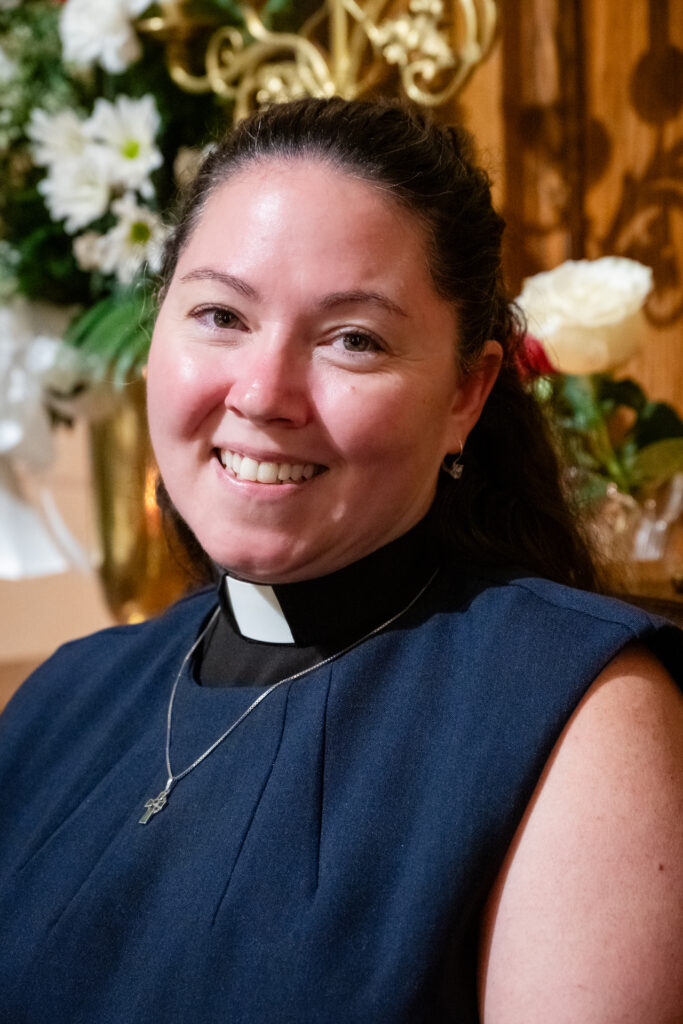
Online Confirmation: A Faithful Way to Form Young Disciples

One of the joyful and fruitful youth ministry efforts the NALC has developed in recent years is our Online Confirmation Program. What began as a practical response to a real need has become a meaningful way to help congregations form young people in the Christian faith.

Across the NALC, we have many small congregations, congregations without pastors, and congregations with only one or two confirmation-age students. In many of these settings, offering a full confirmation program can be difficult. Yet the need remains the same: young people must be grounded in God’s Word, taught the faith faithfully, and prepared to live as baptized children of God within the life of the Church.

That is where the Online Confirmation Program has proven to be such a gift.

Four years ago, we launched this ministry with just seven students. Last year, that number grew to thirty-five. This growth reflects both the need for the program and the value it has already shown in the lives of students and congregations.

The NALC Online Confirmation Program is a twoyearcourse of study that meets weekly during the school year. Together, students work carefully through the Bible and Luther’s Small Catechism, building a solid foundation in Christian faith and discipleship. Classes are held on Zoom, allowing students from many different places and time zones to learn together regularly.

But this program is about much more than convenience.

From a Lutheran perspective we know, confirmation is not simply a graduation from Sunday School or a cultural rite of passage. It is part of the Church’s work of catechesis, teaching the faith into which young people have already been baptized. In Holy Baptism, God places His name on us, forgives our sins, unites us to Christ, and gives us the Holy Spirit. Confirmation instruction helps students grow in the knowledge of those gifts so that they may trust God’s promises, confess the faith, and live as disciples of Jesus.

One of the strengths of the NALC’s online program is that it connects teaching, mentoring, and congregational life. In addition to weekly class sessions, students are expected to meet regularly with a mentor in their congregation and to serve actively in congregational life at least twice a month. This is deeply important. The Christian faith is not learned only in a classroom; it is lived in the Church. Students need not only instruction, but also relationships, encouragement, and opportunities to practice serving others in Jesus’ name.

This is one of the greatest benefits of the program: it supports the work of the local congregation rather than replacing it. Even though the teaching happens online, students remain connected to their own congregation through worship, service, and mentoring. In this way, online confirmation becomes a tool to strengthen congregational life while also providing consistent and faithful instruction.

Another strength is the team-teaching approach. Each class has a minimum of four instructors, allowing students to hear from different NALC pastors and lay leaders. This gives students the benefit of different teaching styles and voices while still receiving instruction that is rooted in the same Lutheran confession of faith. It also reminds students that they are part of something larger than their own congregation. They belong to the wider Body of Christ.

Students themselves have spoken about how valuable this experience has been. One student shared:

“Online Confirmation has been an incredible experience. Even though our confirmation class at my church is small, having the opportunity to meet online with other students my age from different places has made it feel much bigger and more connected.”

That same student also appreciated hearing from different teachers:

“Hearing from different leaders gives us a variety of perspectives and helps me understand my faith more deeply.”

Another student, who is the only young person in their congregation, reflected on the relationships formed through the program:

“Through participating in Online Confirmation, I have been able to connect with other people from different areas… I have learned a lot about God’s Word through online confirmation and I really have enjoyed the past year and a half of learning and building connections.”

These comments capture an important part of the program’s value. For students who may feel isolated in their own congregation, online confirmation provides not only teaching, but also fellowship. They are reminded that they are not alone. They are part of a larger church body, learning and growing alongside other young Christians.

In a time when many youth are surrounded by confusion, competing ideas, and shallow understandings of faith, clear catechesis matters. Students need more than vague spirituality. They need the Scriptures. They need the Catechism. They need to know what God has done for them in Christ and how that shapes their lives.

As Lutherans, we confess that the Holy Spirit works through the Word of God to create and sustain faith. That remains true whether students are gathered in one classroom or connected across many places. What matters most is that they are being drawn more deeply into the life of Christ through His Word, His promises, and His Church.

And that is exactly what this program seeks to do.

We will resume classes for returning students in September. At this time, we are planning to offer the second-year class on Monday evenings and the first-year class on Thursday evenings. We encourage congregations to begin considering whether this program would be helpful for their students. We would also like new students to register by the end of August.

If you have questions or would like more information, please contact:

Pastor Teresa Peters
Director of Youth and Family Ministry
tpeters@thenalc.org


Right Then and There

“I don’t want to offend anyone or lose my friends.” That was the reason one of my church council members gave as to why she holds back from talking to her close friends about faith.

Her response came from a discussion we were having about the importance of building intentional relationships with friends and neighbors with whom we can talk about what it means to be a follower of Jesus Christ. It’s reasonable to understand her hesitancy. Yet, simultaneously, sadly, this is an excuse many believers fall back on because they don’t know how. Admittedly, I have not been exempt from using it myself, that was until one day, I was moved to change.

I had been invited as a guest to attend an NALC Regional Convocation. During one of the breaks, I had an engaging conversation with four individuals from the same church, who were attending as a group. They had asked me about my seminary experience. Up to that point, I had had difficulties with the ELCA candidacy process and I was contemplating leaving to join the NALC.

Throughout our exchange, I noticed how easy it was to talk to them. Even though I was a fish out of water, so to speak, they never made me feel uncomfortable. Their questions were genuine, not attacking or forceful, all while respectful. As we neared the end of the break, they asked if they could pray for me. As I told them that I would appreciate it if they would, they did something quite unexpected; rather than going on their way, they surrounded me, each placing a hand on my shoulder or arm, and began to pray for me, right then and there. It caught me by surprise because I had never had someone not only offer to pray for me but to do it! Over the next few minutes, each of them took a turn praying over something they had picked up on as they listened in, praying for God to give me the insight I needed to make my decision, whatever it was to be, for strength and guidance to go wherever He called me. As they ended, I opened my eyes to find that there were no longer four people surrounding me; passersby had also stopped to pray, placing their hands on those around me.

That day, I witnessed a group of believers demonstrate what following Jesus looks like, and I saw that conversations about life and faith don’t have to be divisive, inspiring me to do the same.

When our Lord encountered someone who was spiritually and/or physically hurting, he didn’t attack them. He didn’t simply offer to pray for them and then continue on his way. Instead, he stopped and prayed over them at that moment.

In the years since, I have stepped out of my comfort zone and offered to pray for strangers—even even someone who struck up a conversation with me on a flight home from Texas.

The feeling I have after praying for someone is that of joy. Doing so reminds me of Luke’s Gospel, where Jesus sends out his disciples ahead of him. As Christ told his disciples (I’m paraphrasing), “If you meet someone receptive to the Word, have a conversation; if they are not, don’t force it and go on your way.” However, I have never encountered anyone who refused my offer of, ‘Can I pray for you?’

Yet, encouraging her and telling her how to do it—based on scripture—only goes so far. While I have had such a positive experience, I find myself asking how I can help empower my councilwoman to set aside her fear and step out in faith.

Her fear is reminiscent of the disciples when Jesus told them to feed the five thousand. They had no clue how, and they certainly didn’t believe they had what it took to get the job done until their shepherd showed them the way. Their reaction was evident; they needed more time to be equipped and empowered.

After they had spent some time watching and learning how Jesus ministered to others, he released his disciples to try it for themselves. That’s when he instructed them how to minister to those receptive to the Word of God and to those who are not. When they came back to him, they reported incredible joy. As her earthly Shepherd, I can see how God has prepared her to spend time with me to learn how to follow Jesus.


The Quandary of Discipleship

Editor’s Note: Pastor Megan Ann Shaffer is writing for Lutheran CORE for the first time. She is an NALC pastor in Pennsylvania.

“Ugh, discipleship is so law-based.” Sadly, I frequently hear this as a disciple-maker. Quite frankly, I can understand why people hold such a position, which results in their hesitancy as Lutherans to begin making disciples intentionally.

However, this interaction got me thinking. What causes such hesitancy and resistance to discipleship? One answer is easy. For years, outreach and evangelism were a silo within the church. Tasks that fell into either of these areas were often left to a team and/or the pastor. As times have changed, that approach no longer works for most congregations. Gone are the days when we could safely assume our neighbors were Christian. Now such assumptions are invalid due to the diversity of our communities.

Secondly, individual faith in America has been a matter of privacy for hundreds of years. My grandmother taught me that there are two topics you do not discuss at a dinner party: politics and religion.

Additionally, Lutherans face another layer of complexity due to the proper distinction between law and the Gospel. As those justified by faith in Christ rather than by good works, we proclaim the Gospel. Why would we focus on something that could trap our parishioners in the cycle of the law?

As disciple-makers, we have a strong tide to swim against while working to reshape the culture in which we live—if we are truly going to live out our vocation to follow Christ’s command to go and make disciples of all nations. It’s a lot to think about, so where does one begin? That was the question I found myself asking as I began my call to a congregation eager to grow. Taking all of these and many other factors into account could easily have overwhelmed me.

When faced with something overwhelming, my seminary professors emphasized that those are the moments when we need to use our toolbox. As pastors and church leaders, we are blessed with a wealth of knowledge available to us in our Lutheran tradition and within the broader Christian community.

Recently, I listened to a podcast featuring an interview with Pastor Bill Hull, who commented on the relationship between preaching and discipleship. He stated what my Lutheran homiletics professors taught me: how we preach and the focus of our preaching forms our parishioners. The idiom ‘you get what you give’ perfectly sums it up. Pastors preaching legalistic sermons form legalistically focused Christians. Likewise consumeristic preachers shape consumeristic Christians, and so on.

What Bill is saying makes sense: “If you want your parishioners to understand their identity as disciples, you must preach the Gospel accordingly.” But what made even more sense was what he said next: “We don’t start the conversation on discipleship at ‘make disciples.’” How can we expect our flocks to go out and make disciples if they have not been discipled?

We don’t start the conversation on discipleship at ‘make disciples.”

Bill Hull, Discipleship pastor and author

As an example, when I was a child, my grandmother never told me to crochet an afghan. That would have been absurd since I had no knowledge of how to go about doing so. Instead, she sat down with me and showed me the basics. As I watched, Grandma demonstrated to me how she created each stitch. Additionally, she showed me how to seamlessly join colors, so they looked like they naturally flowed together. As she worked, I sat with her and would repeat aloud what she was going to do next. Over time, I tried out simple stitches with her help. Eventually, I could also work on my own and seamlessly join colors, so they naturally flowed into a functional piece of art.

Similarly, the goal of discipleship is to empower others to follow the Great Commission, as my grandmother taught me to crochet on my own. She did this by spending time with me. Christ invested in his disciples by spending time with them. Telling our parishioners to go out and do something they have no clue how to do absolutely produces hesitancy and resistance. Conversely, if one has some familiarity with a concept because they have heard about it, it is less intimidating. So consider priming the pump of discipleship by introducing it through preaching.


How Can We Be Sure of Our Salvation?

Many thanks to Dr. Mark Mattes of Grand View University, Des Moines, Iowa, for the video recordings of the lectures he recently gave on how we can be sure of our salvation.  These lectures were given at Lutheran Church of the Master in Corona del Mar, California, where Russell Lackey serves as pastor.  Until recently Russell was campus pastor at Grand View.    

Mark Mattes has been a Lutheran pastor for 38 years.  He served congregations in Illinois and Wisconsin and has taught theology at Grand View University for over 29 years.  He has authored and edited numerous books in theology and has lectured both across the country and in various parts of the world.

Concerning the theological and spiritual significance of his presentation, Mark wrote, “Many Christians look not just to Christ for the assurance of their salvation but also to changed behaviors, such as a greater engagement with prayer, Bible study, and witnessing.  They have a ‘checklist’ for evidence of conversion and ask you to mark off your progress in spiritual growth.”

In this presentation Mark shows us that this approach is simply not scriptural.  “The Bible tells us that Jesus alone is sufficient for our salvation.  If we look to changes in our lives and not to Christ alone, we jeopardize our assurance of salvation.  Anxiety, not security, is found when we look to the quality of our faith or righteousness for comfort.  Growing in devotional practices is a good thing but it does not guarantee our salvation. Nothing other than Jesus can secure those consciences anxious about God’s judgment.”

After watching these videos and reading his book on the same subject, “Ditching the Checklist,” I told Mark, “What you are saying I wish I had heard sixty years ago.  It would have saved me so much stress and anxiety.”

Here are links to his two You Tube videos.


Free Webinar – “Planning as a Paradigm Shift”  

WEDNESDAY, SEPTEMBER 25 – 11 AM EDT

In addition to alerting people to ways in which the ELCA is going further and further off the rails, we of Lutheran CORE see as part of our work providing encouragement and resources for congregations and their leaders and lay members. 

Lutheran CORE is about to embark on providing a new series of resources – webinars on church leadership and ministry led by practitioners who know what they are talking about because they will be sharing insights and approaches that they have learned from their own ministry experience and have put into practice in their own ministry settings.  Many thanks to three members of the board – NALC pastors Brian Hughes, David Charlton, and Doug Schoelles – for articulating and developing the vision for this new ministry and doing the work to bring it to life.

The first webinar, entitled “Planning as a Paradigm Shift,” will be offered on Wednesday, September 25 from 11 AM to 12 noon Eastern Daylight Time.  Lutheran CORE vice president Brian Hughes says concerning the webinar, “Planning is deciding about a preferred future, especially when it comes to creating faithful disciples.”  He also said, “Planning for ministry means setting priorities which might, even in the best and healthiest of situations, require pruning something in order to add a new emphasis.”  He also shared that as we deal with the diminishment of our ministry amid the accelerating de-churching of America, church leaders need to figure out what path to take and how to convince others to join.

When asked why this webinar series starts with planning, Brian answered, “Planning assumes we’ve looked at our current reality and want to be somewhere else.  What is not working and what do we want to be about that’s different?”  When asked whether this webinar is a one-time event, he replied, “This is a taster offered by Lutheran CORE that will likely become a monthly offering with more content and other presenters already in the wings depending on the response and needs we hear.”

Brian Hughes is a retired pastor now rostered with the NALC and living in South Carolina.  After serving ELCA congregations in places like Capitol Hill (Washington DC), Pittsburgh PA, and the Bay Area of California, he finished up with almost twenty years in Columbia MD.  For several years he served as assistant to the bishop in the ELCA’s Sierra Pacific Synod (northern California and western Nevada) with seminary candidacy and first call leadership development as part of his portfolio.  He continues to be part of a movement of reintroducing faith formation into homes, multi-generationally.   After retiring from his ELCA congregation in Maryland in 2019 (where they had nine services a weekend in five languages) he launched an NALC street ministry in Baltimore that evolved into leading a Sunday morning worship service in a strip club.  His former congregation in Maryland is now LCMC.  He currently serves as vice president of the board of Lutheran CORE.  Mission and discipleship have been his passions throughout his entire ministry.

Here is a link to register for this webinar.  There is no charge for attending.


Addressing The Clergy Supply Crisis

Given the increasing shortage of ordained pastors available for call, now is the time when many churches will need to take the initiative to enlist one or two (or three) active members to be equipped and eventually called to serve their own congregation.

Now before you dismiss this strategy as totally impractical, first consider the difficulties involved in finding and calling a full-time ordained pastor in the next few years.  Then I will describe one possible scenario where a congregation chooses to equip and call one or two (or three) of their own members to serve in a pastoral role.

So first, to answer the question: just how difficult could it be in 2024, or 2025, to fill your congregation’s pastoral vacancy?  Glad you asked.  The answer, in part, comes down to basic math.  There are simply too many vacancies for too few available pastors.  And the small number of pastors who are looking for a call have too many options.  This means applicants for your vacancy will often be comparing your church with other vacant churches where they are also interviewing. 

However, it is not just about the quantity of available pastors, it’s often about the quality.  Many of the pastors out “looking” are not vetted; and might not be qualified to serve your church.  This is especially true in the LCMC, where their online “call packet” information makes it clear that vetting your applicants is entirely your congregation’s responsibility.

One more challenge related to the current clergy supply shortage: it will only become more severe in the coming years.  Projections are that there will be twice as many pastors retiring ten years from now than are retiring in 2024.

So now for a hypothetical example of how a congregation—Grace Lutheran—is addressing its pastoral vacancy.  It involves the following steps:

1. Once the congregation’s retiring pastor—who served Grace for 15 years—departed, the Church Council organized a transition team to consider how to move forward when the larger church is dealing with an unprecedented clergy shortage.  That transition team, after meeting for a couple of months, recommends that the Council pursue a two-prong strategy to address their vacancy.  First, they recommend organizing a call committee to “test the waters’ regarding whether the “right” pastor is out there; whether to serve as an interim or more “permanent” pastor.  The second recommendation is that, while the call committee begins this search, the Council begin a discernment process as to whether one or two (or three) active members can be convinced and recruited to take at least one seminary online course.  This initial course would be a way for these members to consider a seminary education and, hopefully, eventual ordination.  The cost of this seminary course would be covered by the congregation.

2. The Council’s first challenge is, of course, one of discernment.  In other words, identifying the right members to approach regarding this opportunity.  Prayer would play a large role as the Council moves forward.  Those considered would be active members who are already known by name by the majority of church members.  Just as important, they would be members who are recognized as having proven ministry gifts.

3. Given the long-term scope of this strategy, those approached would ideally be 60 years of age or younger.  That way they would potentially be able to serve the congregation in a pastoral role for years to come.

4. Those approached and recruited for this ministry opportunity would hopefully have a college degree. This would make them immediately able to pursue a seminary education without additional schooling.

5. These future pastoral ministers could either be currently working full-time (after all it’s only one initial online course) or part-time; or be active retired; or be a nesting-stage or empty-nester parent not working outside the home; or currently be serving the church as support staff.

6. Which initial seminary course would they be taking?  Negotiable.  I would recommend either Biblical studies, preaching, or Lutheran Confessions.

7. Who would these “recruits” be accountable to as they begin this online course?  Either the Church Council or a mentoring team of two to four lay leaders appointed by the Council.

8. What would the financial cost be to the congregation?  Minimal.  Initially, just the cost of the online seminary course(s). However if these members are also recruited to serve in some ministerial role while taking this course, they should be given a stipend as compensation.

I have, since 2019, provided some level of assistance to 38 different congregations dealing with a pastoral vacancy.  Most of these congregations initially approached their vacancy with the assumption that finding and calling a new pastor is essentially the same challenge it was ten to twenty years ago.

Nothing could be further from the truth.  The current shortage of qualified pastors available for call is unprecedented in my lifetime.  (And I’m seventy-two!)

This crisis is not something that can be entirely addressed by top-down denominational strategies.  Not only are such top-down strategies inadequate in 2024; they will be increasingly insufficient as long as the number of available pastors continues to plummet in the coming years.

So if top-down, national-church initiatives prove inadequate, what can the local church dealing with a vacancy possibly do?  Take ownership in addressing your long-term need for pastoral leadership.  In other words, “raise up” competent and gifted future pastoral leaders from among your own congregational members. 

And if your church is, or soon will be facing a pastoral vacancy, where do you begin?  By doing four things:

1. Read this article a second time.

2. Start praying; asking God for guidance when it comes to identifying active members of your church who have the personal integrity and the proven ministry gifts to consider becoming a pastor.

3. Approach your congregational leaders about considering some version of the above ministry strategy.

4. And if you initially need to talk with someone who is not a part of your congregation about how to proceed, email me, Don Brandt, at pastordonbrandt@gmail.com.

For an additional written resource related to this ministry challenge you can click on the link below.

Grace and peace,

Pastor Don Brandt

Lutheran CORE’s Congregational Lay-leadership Initiative (CLI)

“How Your Congregation Can Identify, Enlist and Train Part-time Lay Ministers”


A Father’s Wise Instruction

Do you worry if your children will be wise when they go off to live in this corrupted world? Have you given them the foundation they need?  Jesus said our world is under attack by forces seeking to destroy you and your children. This battle is happening in Christian families as they allow the breach in their Christian practice. As families attend worship less, as parents and children pray and read the Bible less, and as families stay together as families less, the breach in our lives widens.

Hear, O sons, a father’s instruction, and be attentive, that you may gain insight.” (Proverbs 4:1) Your spiritual path is the greatest factor of your child’s spiritual path. If a father goes regularly, regardless of the practice of the mother, between 2/3 and 3/4 of their children will become churchgoers (regular and irregular). But, if a father does not go to church — no matter how faithful his wife’s devotion — only one child in 50 (1/50) will become a regular worshipper.  

Part of the reason for this distinction is that children tend to take their cues about domestic life from Mom while their conceptions of the outside world come from Dad. If Dad takes faith in God seriously then the message to their children is that God should be taken seriously. My dad, Richard, who worked long hours as a foreman in a Chevrolet factory, made sure his kids knew the value of faith.

One of the key reasons for Christian families faltering under the attacks of Satan is that many Christian men have not been willing to “step into the breach” – to fill this gap that lies open and vulnerable to further attack. 

 “And I sought for a man among them who should build up the wall and stand in the breach before Me for the land …” says the LORD. (Ezekiel 22:30) MEN … these are the times in which you and I live … this is the hand we have been dealt. Are we standing in the breach for our children? 

Do you think it is easier or more difficult to be a child growing up in these times?  How much have you taken for granted the spiritual grounding your elders gave you? Are you making sure your child has at least as much spiritual grounding in this more godless age? 

  • What wisdom are you imparting to your children, even if they are grown up?
  • Are you leading your sons and daughters in the path of wisdom? (Prov 4:2-13)
  • Or do you let your progeny, your precious children, wander around to follow the ways of the world? (Proverbs 4:14-19)

 “Men do not hesitate to engage in the battle that is raging around you, the battle that is wounding our children and families, the battle that is distorting the dignity of both women and men. This battle is often hidden, but the battle is real. It is primarily spiritual, but it is progressively killing the remaining Christian ethos in our society and culture, and even in our own homes.” (Bishop Thomas Olmsted)

Men you are to love your wives as Christ loves the church, modeling the love of the Father in their most important earthly relationship. (Eph 5:25-30)  Men, as fathers, you are to care for your children as your heavenly Father cares for you. 

  • How are you the spiritual protector of your wife and children? 
  • How are you training your family for spiritual battle now and in the future?
  • How are you leading your family through the spiritual attacks?

As the father you play a primary role in teaching your children the truth about reality. (Eph 6:2-4) Men, you are the one who should instruct your children to understand the world from a consciously and informed Christian worldview.  So, impart life-giving wisdom to your children as you send them into the world with a biblical view of reality and a faith in Jesus Christ that is rooted in solid example. 

Now may the God of peace who brought again from the dead our Lord Jesus, the great shepherd of the sheep, by the blood of the eternal covenant, equip you with everything good that you may do his will, working in you that which is pleasing in his sight, through Jesus Christ, to whom be glory forever and ever. Amen. (Hebrews 13:20-21)

Your Servant in the Gospel, Pastor Douglas    


Woke? Awake; the Sacred’s Changing

Although the appellation “woke”—used by Ricky Gervais to the Hollywood establishment at the Oscars as “insider” language just a few years ago—is eschewed by progressives now that cultural conservatives have fastened onto it and redeployed it as a demeaning epithet, its inception in progressive circles originally indicated a true stance of religious conversion that Christians should recognize.  As the Church year winds to its eschatologically focused close and begins the new year in Advent, both Jesus and John the Baptist exhort us to “wake” up to the reality of our spiritual situation. Such an awakening is at once a combination of intellectual recognition and a posture of preparation for incipient action. “Woke” originally meant to the true believer in progressive ideals much the same thing that “newly illumined” meant to the just baptized in the early Church; it signaled the passing of a liminal threshold and the adoption of such a substantially new interpretation of age-old data points and orientation to the challenges of life as to be only capturable in the proclamation of a new identity.

It is by now not particularly provocative or insightful to interpret the constellation of ideological commitments that goes variously by the names woke, postmodern, poststructuralism, or social justice as a religion, but it is helpful to explore why this is formally rather than merely experientially the case. If religion is defined sociologically as a set of communal behaviors rather than as a set of metaphysical beliefs or commitments (a hopelessly Western definition in any case), this progressive set of beliefs above-labeled clearly functions as a religion for its adherents.

Channeling the work of Émile Durkheim, Jonathan Haidt helpfully identifies the sociological characteristics of a religion. By designating something as “sacred” a group of disparate people can have a sense of unified identity. You know you are in the presence of a thing (or value system) that has been designated by a group as “sacred” when that thing must be defended at all costs from even ridiculous or accidental insults. “Jokes, insults, and utilitarian trade-offs” cannot be tolerated if they impugn the honor of the thing held sacred because they threaten the fundamental social cohesion of the group’s acolytes. When what is at stake is the sacred, blasphemy codes dictate the range of acceptable expression, and such cannot be challenged by rational objections.

In a lecture at Duke University,[1] Haidt identified six groups that are now identified as sacred in the social justice milieu: the “big three” of blacks, women, and LGBTQIA+ along with a secondary group deemed slightly less sacred consisting of Latinos, Native Americans, people with disabilities, and more recently, Muslims.  Comments or ideas that are deemed less than laudatory of people in these groups or their behavior are met not only with outrage but disgust, an emotional response whose purpose is to get us to avoid things that are potentially poisonous to us—contagions and pathogens.

I spoke in last issue’s article of not permitting the pain of a student in my care—very real pain for which I had genuine empathy and wanted to see healed—to colonize my theology, coming to exercise a controlling influence over it. Viruses colonize their host by hijacking the cell’s DNA reproduction system, turning its very system of replication and renewal to its own purposes. The reason why progressive Christianity quickly ceases to be Christianity at all is that the Church’s ministries of renewal and replication—catechesis and evangelism—are necessarily reemployed in service of the new objects that are, in fact, now deemed sacred.

In the case of progressive Christianity, the aforementioned victim groups replace the orthodox objects of worship (the Triune God, revealed by the life, teaching, death, and resurrection of Jesus Christ) as the center around which the group’s identity revolves.  In the same way, the holy tasks of pursuing an amorphously defined and ever-mutating sense of justice for these sacred victims replaces the orthodox tasks of preaching the stories of Scripture and celebrating the Sacraments commanded by God’s Sacred Victim, as well as the repentance, conversion, and amendment of life according to the revealed will of God to which these lead. Progressive Christianity quickly ceases to be formally Christian precisely because it holds different things to be sacred than does the Biblical, Apostolic faith. I will have more to say on this in the next issue, but for now it is enough to note that it represents a different religion, not a different way to be Christian.


[1] https://youtu.be/Gatn5ameRr8?si=5elvFmZJAPTJyapK


Once You Know the Makeup, You Know the Outcome

If there ever will be a time when that old adage will be proven true, it will be with the ELCA’s thirty-five-member Commission for a Renewed Lutheran Church.

This commission was formed in response to action taken by the ELCA’s 2022 Churchwide Assembly.  The assembly directed the Church Council “to establish a Commission for a Renewed Lutheran Church” which would be “particularly attentive to our shared commitment to dismantle racism” and would “present its findings and recommendations to the 2025 Churchwide Assembly in preparation for a possible reconstituting convention.”  

Later communication from the ELCA Church Council stated that the commission should be made up of at least 25% people of color or whose primary language was other than English and 20% youth and young adults.  Keeping in mind that the membership of the typical ELCA congregation is older and white, this means that the commission will not represent the ELCA as it is but the ELCA as those who are leading and driving the process want the ELCA to be. 

The thirty-five members of the commission have been chosen and have met once (in mid-July).  Their biographical paragraphs can be found on the ELCA website under www.elca.org/future

As I read the bios there is no doubt in my mind that the commission is made up of people of great experience and expertise.  I have no question about their ability.  My concern is with their passions and priorities.  Reading their bios and remembering that these are the people who have been chosen to reshape the ELCA, one realizes that in a very short time the ELCA is going to be radically different from the church body that was formed in 1988. 

This is a very capable group.  It includes –

  • Two synodical bishops
  • One seminary president
  • Three ELCA college and seminary professors

Members of the commission have held such positions as –

  • President of the ELCA Latino Ministries Association
  • Assistant general secretary for international affairs and human rights for Lutheran World Federation
  • Top leaders of Lutheran Immigration and Refugee Service
  • Chair of the Lutheran Campus Ministry Network
  • A person who has been chair, vice chair, and secretary of the board of trustees for Portico Benefit Services
  • Executive Director of South Carolina Lutheran Retreat Centers 
  • Member of the board of trustees and treasurer for Lutheran Outdoor Ministries
  • President and chief executive officer of Mosaic (a social ministry agency which serves people with intellectual and developmental disabilities and other diverse needs)   

Thirteen of these people have held positions within their synods or have served on the ELCA Church Council. 

I was glad when I read comments from two of them.

  • One said that “he hopes the perspectives he brings from his law practice and his work on synod and churchwide constitution committees will help him spot obstacles and identify solutions in our governing documents.”   
  • Another one (one of the co-chairs) described himself as having “a penchant for good governance and organizational structure.”

But beyond that, reading the bios I became more and more deeply concerned.  I see this group as creating a new church body whose primary focus will be not on fulfilling the Great Commission but on social justice, LGBTQ+ and Diversity, Equity, and Inclusion activism, and where men will continue to play a diminishing role. 

For all of the talk about the equal participation of women in the church, the ELCA Church Council and this commission are obviously not concerned about the equal participation of men in the church.  The commission is made up of twenty-one women and only fourteen men.  Women outnumber men by 50%.  And there are nearly three times as many women of color on the commission as men of color.  Of the eleven people of color (eleven out of thirty-five or nearly one-third of the commission), eight are women and only three are men.

Three of the members of the commission are assistants to synodical bishops.  But in each case their focus is on social justice issues and anti-racism, not on any of the other functions and ministries of a congregation.  As an example, one of the members is assistant to a bishop for communications and development, but in his bio paragraph he celebrates the fact that he “has successfully centered social justice and advocacy in all aspects of communication and community engagement.”

Seven out of thirty-five (20% of the commission) hold positions of leadership within LGBTQ+ activist organizations and/or mention that they are in a same-sex married relationship.  Please note:  This is not saying that only 20% of them are in favor of LGBTQ+ issues.  Rather it is saying that 20% of them see their being an LGBTQ+ activist as among their most prominent qualifications for being on the commission.  These people include –

  • A Proclaim chaplain with Extraordinary Lutheran Ministries 
  • Someone who has consulted with numerous synods supporting LGBTQIA+ cultural competency
  • An ordained deacon at a Reconciled in Christ congregation
  • The convenor of a synodical Reconciled in Christ ministry 
  • The director for Pride in her company’s LGBTQIA+ Business Resource Group 
  • Someone who has served as director of community relations for a non-profit corporation that serves the support and advocacy needs of transgender service members
  • A board member and former co-chair of ReconcilingWorks 
  • Someone who since the age of six has “stubbornly refused to conform to society’s expectations” and whose self-description is a “genderqueer lesbian” who “seeks to bridge binaries and transgress borders”

Equally alarming is the fact that seven out of thirty-five (again 20% of the commission) hold positions of diversity, equity, and inclusion activism in their place of employment and/or leadership.  Again this is not saying that only 20% of them make decisions and take actions based upon the principles of diversity, equity, and inclusion.  Rather it is saying that a full 20% of them see their holding positions of diversity, equity, and inclusion activism in their places of employment and/or leadership as among their most prominent qualifications for being on the commission.  These people include –

  • A senior diversity, equity, and inclusion consultant in local government
  • The chief diversity officer for a religious health organization who has received two certificates in diversity, equity, and inclusion
  • A former diversity/cultural competency consultant in the non-profit sector 
  • The convenor for a synodical resolution on authentic diversity and inclusion 
  • Someone with over thirty years’ experience facilitating and training for intercultural equity leadership and organizational change 
  • Someone who conducted discussions about race and diversity at the 2015 and 2018 ELCA youth gatherings 
  • A person who is vice president of diversity and inclusion at one college after being director of diversity and inclusion at another college  

This final person shows the great extent of her passion for and experience in diversity, equity, and inclusion as she writes that she has “facilitated several workshops on privilege and identity, creating inclusive learning environments, and the basics of diversity and inclusion.”  In addition she has “served as a keynote speaker on topics related to diversity, equity, and inclusion,” and has “completed a year-long fellowship with the National Association of Diversity Officers in Higher Education.”

Following the principle that “once you know the makeup, you know the outcome,” it should be painfully obvious and clear what this group is going to come up with for the shape and mission of a fully reconstituted Lutheran church.  We will keep you posted.


Severed Foot Faith?

Choices, choices and AdChoices. Our hyper-consumer culture overwhelms us with all the choices we can make to please our whims. For all the hyper-individually focused advertising that is pushed at you, you as a person are lost. You are just a consumer whose only value is what you can spend.

Our Adchoice mentality affects our faith. We say we can be spiritual on our own with a custom order Jesus on our terms. This consumeristic spirituality caters to our self-centeredness. The whole “ME and Jesus” private relationship is not biblical, but blasphemous. This misguided, “Me and Jesus” spirituality not only runs counter to scripture, but even more, it degrades God’s saving work. We are redeemed as we are part of God’s people. Our ultimate communal expression is communion where we are joined to Christ and one another (1 Cor 10:17). Certainly, a self-centered spirituality will not require us to participate seriously in a church community.

If you revel in being a severed foot cut off from the body of Christ because us other Christians stink and you are more holy than us, I am offended! Who are you not to grace us with your unique embodiment of sinfulness? Who are you to think you can have Christ without us? Who are you to withhold the work of the Spirit in you to bless others for God’s glory?

The Way of Christ is not about and cannot be just a personal relationship with Jesus. Our faith has been handed down through the faith community. We are individually members of the body, the Church, but there is no severed foot faith separate from the body. The weakness of this self-centered faith in the United States is apparent from the weakness of individuals to pass along the faith.

Following Christ is not a private individualistic affair. Yes, you are to have a personal connection to Christ. While we do have our personal and solitary times with the LORD, we are baptized and called to exercise our faith in God by how we live with one another. We are to meet together to encourage one another in the faith, rather than flying solo to be picked off one by one in spiritual warfare. (Heb 10:23-25) If even the Son of God needed a small group of disciples to do faith with, why would we think we can sever ourselves from the body and be okay?

That we are to follow Christ with one another is abundantly clear throughout the New Testament (see below). We worship together. We experience life and salvation together. We are bound together. In Christ we, though many, form one body, and each member belongs to all the others (1 Cor 12, Rom 12:5). So, we forgive one another. We bear one another’s burdens. We share God’s love with one another. We are to be devoted to one another in love. We are to honor one another above ourselves. Rather than slacking, we are encouraged to do more and more life together as God’s people.

Don’t be a sinner alone.  You are redeemed by Christ to belong to His people, not to go life alone. To be clear, if you are doing faith as a severed foot without fellow sinners, you are unbiblical and disobeying Christ. So as baptized Christians joined to the Body of Christ, actively engage your spiritual life by living it out in the temple of God’s people (1 Pet 2:4-5). Embrace the Spirit-given blessing of belonging to the family of God.  Come join your brothers and sisters in Christ so you may more powerfully grow in knowing Christ in your life.

May the God who gives endurance and encouragement give y’all a spirit of unity with one another, in accordance with Christ Jesus, so that together y’all may with one voice glorify the God and Father of our Lord Jesus Christ. (Rom. 15:5-6)

Your servant in his Church, Pastor Douglas

(See Jn 13:34, Rom 12:10, 13:8, 1 Cor 3:16-17, 12:12-14, 2 Cor 13:11, Gal 5:13, Eph 4:2, 4:32, Phil 2:5, Col 3:13, 1 Thess 4:9, 5:11, Heb 3:13, 10:23-25, 13:1, 1 Pet 1:22, 1 Pet 3:8, 1 Pet 5:5, 1 Jn 1:7, 3:23, 4:11-12)