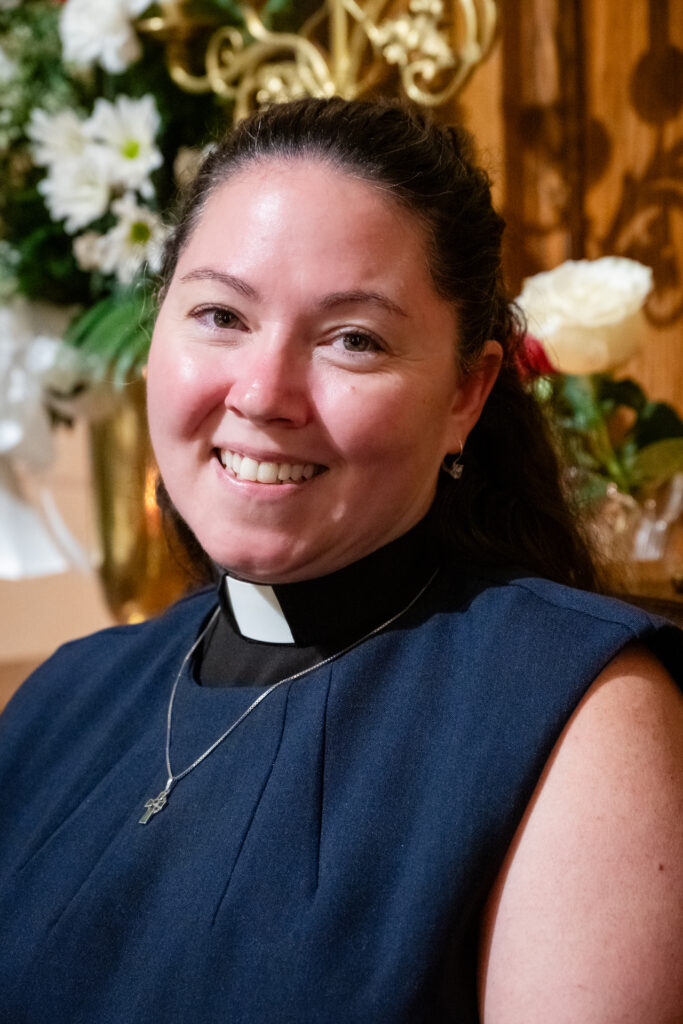
The Awaken Project Offers a Gap Year Program

Introduction by Dennis D. Nelson: In this issue we will be featuring The Awaken Project (TAP), a nonprofit organization housed on the campus of Mount Carmel Ministries in Alexandria, Minnesota.

The last (January 2023) issue of CORE Voice includes the first in a series of articles about residential discipleship ministries for young adults.  Here is a link to the article about Faith Greenhouse, which is affiliated with Faith Lutheran Church in Hutchinson, Minnesota.

The Awaken Project (TAP), a nonprofit organization housed on campus at Mount Carmel Ministries in Alexandria, Minnesota, is pleased to continue to offer an eight month/two semester gap year program for students who are interested in a full or part time career in ministry, seeking to study the Bible on a collegiate level in community, and travel across the United States while engaging with practical ministry opportunities.

Our partnership with Mount Carmel is one of the most crucial aspects of our program. Drawing on Mount Carmel’s rich history within the Lutheran Bible Institute, The Awaken Project seeks to draw upon the same spirit that spurred on so many to attend LBI and cultivate that wonderful community for many decades. We believe that young adults who are committed to living, serving, learning, and growing together under the cross are an immensely valuable part of the Body of Christ, and we are committed to providing young adults the opportunity to experience this transformational community life.

The fall semester is primarily Bible classes, taught by independent instructors who join us for a week at a time and teach one subject for the duration of the week. Other rhythms of the fall include a morning devotional centered around the Moravian Daily Texts, weekly community meals, weekly spiritual formation sessions with mentors, and hangouts with the residential community. The spring semester is when most of our travel occurs. We partner with Quake Events, a national youth conference circuit of events geared toward middle and high school students. Our students attend these events throughout the spring and lead in relational ministry, workshops, and production assistance.

We strive to sponsor a program that sees all students grow in relationship with one another, teachers, mentors, community members, and our Lord, Jesus Christ. A recent alumna of our program, Courtney Corrente, has described her time with TAP as an answer to prayer that she never thought would come to pass, but now can hardly imagine her life without the community she’s found through TAP’s gap year program. After completing her year with TAP, she was hired onto Mount Carmel’s staff as their Communications Coordinator, which has allowed her to gain immediate experience in her fields of study (strategic communications), continue to maintain the community she gained last year, and invest back into this year’s cohort of TAP students.

I am expecting that there will be plenty more stories like Courtney’s over the years of TAP’s gap year program. If you know anyone who has been longing for a community to do life with, who seeks high quality and affordable Biblical education, and who has an itch to travel and serve, The Awaken Project’s gap year program can be a wonderful opportunity. Please contact myself, Steven Wagner, at [email protected] if you have any questions or know someone who may benefit immensely from this program.

If you feel led to contribute a tax deductible donation to The Awaken Project, gifts can be sent to The Awaken Project at 800 Mount Carmel Drive NE, Alexandria, Minnesota, 56308.


Igniting Renewal Through Mission

(How ‘City Mission’ was Born, Part 2)

Editor’s Note: K. Craig Moorman is an NALC pastor of River’s Edge Ministries in Maryland and is a member of the board of Lutheran CORE. Pr. Moorman encourages you to read Part 1 of his article as background for Part 2. Click here to read Part 1 which was published in July of 2022.

Amid our first City Mission in April of 2014, the temperature dropped dramatically and unexpectedly to a bone-chilling 19°. Our base of operations was a 30’ x 50’ tent—we were not in the comfort, warmth, and familiarity of a church setting. This is how City Mission was born. It was an important moment of discovery, more of a blessed eureka moment, when we stumbled upon a basic truth: Renewal is ignited through mission. Now I am inviting you to engage in a missional experience that could reinvigorate the life of your congregation and bring you a season of refreshment and renewal.

Although I’m sharing a first-hand account of one such experience, City Mission, many of you have also been immersed into the mission field. You might recall how it revealed the heart of Jesus and His Gospel, a face-to-face encounter with the Cross. Oftentimes, there is a severe shaking from the core of our being when a reprioritization of our living takes place—new Christ-centered values emerge, a greater hope is gained, and renewal of body, heart, mind, and soul settles in.

These past two and a half years of navigating through a global pandemic and utter cultural turmoil have diminished our emotional capacity, made us more prone to discouragement and vulnerable to despair. And, if that’s not enough, let’s pile on the usual daily grind and throw in more critical personal matters, some unresolved and unattended to. All of this leads us not to “green pastures” and “still waters” but, instead, a wanting and a desperate longing for peace and a renewal by the Spirit.

Therefore, I humbly invite you to engage in Gospel-centered mission. My hope is that it will serve as an antidote for what is ailing each of us individually, our churches/communities, and even the nation. I believe making such a commitment and engaging in Christ’s Kingdom work will be the catalyst for this reprioritization that I spoke of previously. It can move us out of our lethargy, pre-occupations and distractions, misappropriations, and missteps, etc. AND gently (and graciously) push us in the opposite direction. Might this be repentance? I believe mission can significantly help us to get unstuck and experience such a metamorphosis … renewal! A calling back into the mission field will place us right at the foot of the cross, from death to resurrection. What a gift.

In my earlier article, “How ‘City Mission’ was Born, Part 1,” I wrote of how City Mission developed from another missional outreach ministry called Cross Country Mission. You may remember that CORE is an acronym for (Lutheran) Coalition for Renewal and bringing elements of ‘renewal’ to the broader Lutheran community has long been a part of our vision. Practically speaking, I pray that this article will bring you personal renewal and help reignite your passion for mission and bring it back to the center of the conversation.

Again, amidst our first City Mission in April of 2014, the temperature dropped dramatically and unexpectedly to a bone-chilling 19 degrees. Our base of operations was a 30’ x 50’ tent—we were not in the comfort, warmth, and familiarity of a church setting. This is how it all began. It was cold, uncomfortable, unfamiliar, and a little chaotic. Believe me, it was neither perfectly planned nor executed! We have since unofficially adopted a guiding principle, “Expect the unexpected … and see what God does.” This has been freeing on so many levels!

Later that same day and into the evening hours, after all our 50-60 participants/leaders retired for the night, either commuting back to their homes or to their scattered tents, Brother Ray and I moved back into the quiet of the big tent and sat down on a couple of bales of hay. I’ll never forget my dear friend looking up, with tears in his eyes and saying, “It just doesn’t get any better than this.” There we were, both in our late fifties, tired, worn down, cold, etc., but completely content and at peace. And yet I couldn’t help but wonder why Ray had spoken those words. I’ve been thinking about Ray’s statement for the last eight years. Something miraculous had happened and Ray knew it but at the time could not articulate it.

But what was it—what made his statement true? In a nutshell I believe we witnessed the Church operating as Jesus intended. He gave us a foretaste of the feast to come.

In the following paragraphs I talk more about City Mission and what we have learned from each event. These ‘take aways’ have morphed into lessons learned that are the building blocks for how City Mission operates and lives out its mission. I believe these lessons are transferable to others pursuing and engaged in mission in other congregational settings.

First, since our original disaster relief mission to Biloxi, Mississippi (post-Hurricane Katrina), in November of 2005, it’s been a priority of River’s Edge to help those who have been through the storm, be it a hurricane, flood, tornado, human-generated catastrophe, or just the difficulties of life. Our initial efforts came through Cross Country Mission and then through City Mission. City Mission was designed to engage the local parish in its own back yard.

Our City Mission base of operations is a 14-acre landbase situated just 20 minutes from downtown Baltimore. I would describe it not so much as ‘disaster relief’ but ‘urban relief’ because it involves cleaning up trash and litter, building out construction-related projects, landscaping, clearing of land, painting, gardening, and preparing meals. Your base of operations may be in your church building/campus or elsewhere.

One benefit of City Mission is that little traveling is needed. We intentionally identify and engage in mission on a regular and more localized basis. Too, it’s typically less costly and feels more like a camp, retreat, workshop, and worship gathering all rolled into one. Another unique characteristic of City Mission is that its ‘success’ does not depend solely on River’s Edge Ministries, nor does it look just like our church. This is most obvious during the evenings as we gather a large group for a meal, fellowship, and worship. In that gathering, a multitude of individuals are involved in food planning/prep, music, and speaking/preaching. This, then, is a gathering of the larger Church.

Second, our ‘take aways,’ now reflecting our core values, enable us to remain faithful and effective in establishing a Kingdom-oriented, repeatable, missional experience called City Mission. Establishing, implementing, and fine-tuning the following three specific components has been critical in contributing to the development and effectiveness of City Mission:

  1. Networking with Local Community Organizations and Leaders—We have been intentional in networking with community organizations and leaders who are based in the mission field we serve, thus reflecting a more authentic heart, mind and will of the community.
    • One of the unexpected blessings of this decision is that it allowed us to work more interactively with many different groups/folks, crossing racial boundaries. This foundational core value has revealed the power and efficacy of working directly with those who already have ‘boots on the ground,’ moving us beyond the familiarity of just our building and resources to work cooperatively with others who are well established and respected in the region.
    • This bridge-building has created ‘natural’ relationship development with a vast array of people from many different backgrounds intimately involved with City Mission (i.e., the Baltimore Ravens, Towson University Gospel Choir, Helping Up Mission, Baltimore City Community Organizers, etc.) gathering together, literally, under one tent. The outcome of such intentionality has been nothing less than miraculous!
  2. Building an Alliance of Multi-denominational Churches—Certainly, there is a place for Lutherans doing life/mission together; after all, this is what many of us are most acquainted with. But there is an even greater place and need to invite and gather the broader Church to do life together and share in the mission of Christ’s Church, especially in these challenging days. City Mission has been a highly effective and faithful conduit to bring the body of Christ together. This includes many different speakers, music, denominations, etc., from many different backgrounds, all bound up in ‘orthodoxy’ and the Gospel of Jesus Christ. It’s all about His work, His justice, His compassion, and His mission … with no other agenda! Let us, as the Church, carry the narrative for the day and not allow others (with a radically different agenda and cause) to fill that void!
    • After nearly a decade of building out this mission, it is a joy to share that we’ve had dozens of different churches from the various streams of the Church (Catholic, Protestant, and Pentecostal) participate in City Mission representing many denominational backgrounds including River’s Edge Ministries, GraceWay International Community Church, Wilkens Avenue Mennonite Church, The Transformation Center, Mt. Union Lutheran Church, East Baltimore Graffiti Church, Baltimore Rescue Mission, Redeemer Lutheran Church, St. Timothy’s Ordinariate Catholic Church, and many more.
    • As a result of such broad-base missional effort, we have become much more united and effective as a ministry. In the High Priestly Prayer found in John 17, we hear Jesus praying to the Father, specifically that we—the Church—may be united, “… that they may become perfectly one, so that the world may know that thou hast sent me and hast loved them even as thou hast loved me” (v. 23)As a ministry, we are committed to pursuing such a vision for this hour.  
  3. Creating a Base of Multi-generational Participation—Quite often it seems that youth ministry ‘programs’ are built on dynamism and the personality of a particular youth leader. The problem with this model is that everything hinges on that leader, including the availability of time and resources. Over the past decade or so, and as a lead pastor in at least three different congregational settings, I have taken a much different approach in overseeing/leading youth ministry/young adults. It has never been centered on the charisma of a youth leader. There is always a component of intentional discipleship and participation in mission. And even more importantly, parents and other older adults are almost always involved in this process. It seems that the presence of the older generation has produced a younger generation that is much better equipped and more deeply grounded. This model has been especially effective in City Mission.

Finally, on a more personal note, an unexpected (and invaluable) outcome from both the Cross Country Mission and City Mission experiences has been the immense even life-changing impact upon my children. I’ll never forget interviewing for a call with about twelve adults present, nearly all of them parents, telling me that none of their children were attending church and certainly not in any type of relationship with Christ. I remember feeling extraordinarily sad. Then they asked me about my children, church life, and God. They were shocked when I expressed to them that all five of my kids were not only involved ‘in church’ but had a deep and abiding relationship with Jesus Christ. And, almost without hesitation, I said this was due to exposing them to the mission field beginning with our time in Biloxi, MS, after Katrina hit the Gulf Coast and beyond.

Over the years, City Mission has impacted many hearts and minds for the sake of the Kingdom. If you’ve ever witnessed the catastrophic devastation in the aftermath of a hurricane, flood or tornado, you’ll understand that the sights, sounds, smells and stories get in your belly—take up residence in your heart and minds—and never leave you the same. A calling to step into the mess inevitably surfaces and mission ensues. I suppose this is called compassion. Compassion seems to be that thing which drives our mission, which allows us to participate in events much larger than ourselves and our own worlds. Our lives are forever altered!

Our next City Mission is slated for May of 2023. It would be our honor to welcome you to our Missional Life Center and to host and house you for this event. It’s an opportunity for you to ‘test the waters’ surrounding City Mission. Or we’d be privileged to head in your direction to provide training at your base of operations.

The essence of this communique is to encourage you anew, as a brother or sister in Christ, to simply engage in mission … to at least do something regarding mission … and then make it a regular part of the ebb and flow of life. This is how renewal can be ignited and your life restored. May your life be renewed … for the living of these most challenging and historically significant days.

Just this past spring, I asked our young adult, post-high school group (many of whom have participated in City Mission since their middle/high school years) to describe City Mission in just a few words. Ben, one of our ‘veterans’ who is now 24 years of age said, “City Mission is a raw and unfiltered experience of what it means to be the Church.” Truly such a youthful and unspoiled understanding of the nature of the church can replenish and enable us to embrace how mission can spark renewal. 


The NALC Pastors’ Conference: One of the Best

It is always a joy when you go to a Pastors’ conference and leave with a sense of energy and enthusiasm for ministry.  Over my twenty-eight years of ministry, I have been to my share of such events.   They have been a mixed bag.  To quote Forrest Gump, they “are like a box of chocolates.  You never know what you’ll get.”  Some are definitely worth your time.  Others are mediocre, but since you have the chance to see old friends, you don’t mind.  Others leave you positively frustrated.  Of all the conferences I have attended, good, bad and indifferent, I must say that the NALC Pastors’ Conference held in Orlando, Florida, from February 15 to 18, was one of the best. 

Although I am not a pastor in the NALC, I was able to attend as a representative of Lutheran CORE.  The theme of the conference was: “Always Be Ready: Apologetics in Real Life,” based on 1 Peter 3:15.  The keynote address was given by the Rev. Dr. Mark Mattes, with plenary addresses by Rev. Dr. Maurice Lee, Rev. Dr. Dennis DiMauro, and Rev. Dr. Thomas Jacobson.  Each speaker addressed the topic of apologetics from a different perspective.  Rather than giving a full synopsis of every presentation, I will mention what were the highlights for me.

Mark Mattes identified one of the major mistakes that Christians made in the second half of the 20th Century.  This was to adopt the world view of unbelievers and skeptics, in an attempt to show that the Christian faith can be made to fit into those worldviews.  Instead of arguing against people from the point of view of modernity or post-modernity, we should argue with them from the point of view of the Christian faith.  Our goal should be to help people see what difference it would make if the Christian worldview were true.

Maurice Lee reminded us of the approach taken by Justin Martyr.  As his name indicates, Justin Martyr was not only an apologist, but died as a martyr.  Justin sought to refute false rumors about Christianity and engaged with pagan philosophers like Socrates and Plato.  However, he had a third strategy.  This was to describe what happens in the liturgy of the Eucharist.  In addition to saying what Christianity is not, we need a picture of what it is.  There is no better place to find this than weekly Sunday worship.  The same is true in 2022.

Dennis DiMauro recounted an experience he had while doing door to door evangelism.  A young man whom he met shocked him.  He wasn’t interested in general information about Christ, or the Church.  What he wanted to know was what had happened in Pastor DiMauro’s own life to make him believe in the Gospel of Jesus Christ.  He reminded us that while there are intellectual arguments and rhetorical strategies that can be helpful, what is most important is being able “to give an account for the faith that is in us.”  Lutherans tend to shy away from the term testimony.  Nevertheless, we need to be able to testify to what God has done for us.

Thomas Jacobson reminded us of the class differences that need to be taken into account in reaching the unchurched.  Lutherans have tended to follow Schleiermacher by focusing on the “cultured despisers” of Christianity.  The problem is that the largest group of un-churched people in America today are not the cultured people of the upper middle-class.  They are the blue collar and the poor.  In recent decades, church attendance remained fairly stable among the successful and well to do.  Meanwhile, among the poorer classes, the bottom has fallen out.   We need to find a way to speak to them too. 

While at the NALC Pastors’ Conference, I was also able to attend two break-out sessions.  The first was led by Rev. Doctor Russell Lackey of Grand View University in Des Moines, Iowa.   He spoke about the NEXUS Institute, a summer theological institute for high school youth, which is held each summer at Grand View.  (This summer it will be held on June 12-18.)  Pastor Lackey shared information about research that has been done on such summer theological institutes.  This research was cross-denominational, cross-cultural, and multi-faith.  It indicated that summer theological institutes are very effective.  As many as 25% of young people who attend these summer theological institutes end up entering the ministry in their respective religious communities.  With the growing shortage of ministers in the Lutheran Church today, institutes like NEXUS are extremely valuable.

In the summer of 2022, there are twenty-five spots for young people at NEXUS.  Bishop Dan Selbo challenged the pastors at the conference to make sure that there will be fifty attending NEXUS in 2023.  I was so impressed that I rushed home and nominated a young person from my congregation for this year’s institute.

The second break-out session that I attended featured Pastor Dave Keener.  It was an introduction to the newest phase of the Life-to-Life Discipleship.  I was excited to hear that the NALC is developing its own resources for Discipleship ministry.  These resources will be tailored specifically for Lutheran congregations. The first will be a 24 week-long introductory curriculum on discipleship.  Those resources are meant to be available on the NALC website in the near future.

Of course, like most conferences, there was good fellowship.  I was able to reconnect with old friends and make new friends.  I also enjoyed visiting my hometown of Orlando, where I was born in 1964.  As I returned home, I was grateful for the six insights that I shared above.  They either confirmed what I am already doing or gave me new areas of ministry to explore.  If you have never been to the NALC Pastors’ Conference before, I encourage you to attend next year.  I also encourage you to get in touch with the speakers above if you want to learn more about what they shared.

Rev. David Charlton

Vice-President, Lutheran CORE


NEXUS: One Theology Institute, Two Mentors’ Perspectives, and a Triune God

by Ethan Zimmerman and Luke Ratke

Executive Director’s Note: Many thanks to Ethan Zimmerman and Luke Ratke for telling us about their experiences at NEXUS this past summer.  Ethan and Luke are both NALC college students and are planning on attending the NALC seminary after graduation.  They have also made a video about NEXUS, which is posted on our website.  A link to that video can be found here.

Luke

NEXUS is a vocational discernment institute rooted in Lutheran theology hosted by Grandview University in Des Moines, Iowa, and it is a week full of blessings! High school students who are contemplating their vocation, what God’s call for their life is, come to NEXUS and experience fellowship with other young Christians who are going through similar journeys. Morning and evening worship, classes on the Old and New Testament taught by solid Lutheran professors, small group discussions led by college-age mentors, and lots of prayer are all part and parcel of what NEXUS is, learning where God’s call meets your life!

Hi, my name is Luke and here are some of my thoughts on NEXUS: NEXUS is a great organization, because God makes it one! I loved being able to be a college-age mentor and a leader for the high school participants at NEXUS. Furthermore, I also liked being able to learn about God at NEXUS with and through the high school students.

My favorite thing about NEXUS this year was getting to meet and talk to Christians I had never met before or only briefly. I was able to talk to pastors, professors, and other Christians about Christianity. For myself, who someday wants to do full-time ministry as my career, working at NEXUS let me have conversations with other college-age students and high school students who think their vocation is full-time ministry. I also was able to practice and learn skills that will someday help me when I am doing full time ministry because I was a college-age mentor at NEXUS. Such skills were helping lead a small group, writing/giving a devotion, talking about the Bible with other people, etc.

Hello all, my name is Ethan Zimmerman, and this is my perspective on NEXUS!

NEXUS is something truly special, something that I don’t think happens anywhere else. NEXUS is not just another church or bible camp; discipleship and vocational discernment happen, and bonds of Christian fellowship that will stand the test of time are forged. My time as a NEXUS mentor was truly a blessing, and as my fellow mentor Chris put it, good for my soul!

Ethan

The topic of discipleship is something that has been on my mind for quite some time. I have wondered how I can disciple the people around me while I am at college, and being at NEXUS showed me how! Even though we were only with the participants for a week, we lived life with each other, we worshiped together, learned together, ate, laughed, and cried with each other. God showed me that this was how discipleship happened, in the nitty gritty little things of life, right in the trenches with people as they go through things and think about what God has in store for their life. Are they to be pastors? Missionaries? Youth leaders? Being there with these young participants while they pondered these questions and sought to answer what the Lord has called them to was truly a blessing and an eye opener as to what discipleship could look like.


I left NEXUS feeling encouraged, not just because I saw what discipleship and vocational discernment looked like in the lives of young folk, high school students, but because of the friendships that I left with. From the late nights discussing theology with the other mentors, to the goofy laughs shared with the participants, I left encouraged that there are other young Christians out there yearning to pursue God and answer the call He has given them in their lives, and that not every young person is all about decadent hedonism, but faith is still alive amongst my generation. I praise God for NEXUS, for the lives changed by it, for the doors opened because of it, and for the continued ministry it will have in the future!

We both think that every high school student that is a strong Christian should pray and think about coming to NEXUS next summer. Every high school student should think about going to NEXUS, not just high school students who think or know their vocation is full time ministry. We want to thank Lutheran CORE for financially helping The NEXUS Institute. And last but greatest of all, we want to thank God the Father, Son, and Holy Spirit for NEXUS! 


Global Missions 2021: How Did We Get Here … What Now?

Rev. Bill Moberly is the Founder & Director of Awakening Lives to World Missions, which exists to call, equip and network congregations for more effective global outreach. ALWM draws on his 30+ years of experience in training churches across the US.

“The joy experienced during these months will never be forgotten,” he wrote, “the joy of telling people ‘The Old, Old Story,’ a story which they never before had heard. That joy cannot be described; it can only be experienced.” (Rev. Ralph D Hult, Lutheran pioneer missionary to Africa.)1 Those stirring words echo Jesus’ teaching in Luke 15:7 “I tell you that in the same way there will be more rejoicing in heaven over one sinner who repents than over ninety-nine righteous persons who do not need to repent.” The powerful stories of the thousands of Lutheran missionaries who served the predecessor bodies that formed the ELCA, going back to the first missionary sent in 1842, are rooted in this truth and the call that compels us to pray, send and go.

18 Then Jesus came to them and said, “All authority in heaven and on earth has been given to me. 19 Therefore go and make disciples of all nations, baptizing them in the name of the Father and of the Son and of the Holy Spirit, 20 and teaching them to obey everything I have commanded you. And surely I am with you always, to the very end of the age.”

Matt. 28:18-20

This is still the primary Global Mission task given to His Church by our Lord Jesus Christ: to go and make disciples of all the nations (ethne)! If your only frame of reference for global missions is the past generation, during the decline in the number of synodical Lutheran missionaries, and the increasing focus on the “accompaniment” mission model in the ELCA, it might surprise you to learn, for example, that China (including Hong Kong & Taiwan) and India have received more Lutheran missionaries since 1842 than any other country! Lutheran pioneer missionary efforts among the unreached and least reached over the decades have always included proclamation of the Gospel, discipleship, along with building schools, hospitals and other humanitarian efforts.

With my undergrad degree in history, I love looking at where we have been – both for the powerful stories of people living and serving – but also to learn from the past. When I heard for the first time in the early 1990’s about ‘accompaniment’ as the likely new ELCA global mission, I had just begun working more directly in global missions. In that role I was learning terms like ‘unreached people groups’ and distinguishing between the unreached and unevangelized. My first thought on ‘accompaniment’ was, ‘how can the more than three billion unreached people, where the church barely exists – if at all – ever invite us to accompany them?’ Nearly half of the world’s population, the “all nations” still needing to hear the Gospel, were ignored. So, let’s look back to 1988.

When the ELCA formed, there were more than 780+ long term missionaries serving the three predecessor synods: ALC, LCA and AELC. By 2002 the collective number had dropped to 166. This now also included long term and short term missionaries (1-2 years). Now, according to the ELCA:

 “there are 240 missionaries in four categories:

Personnel positions in long-term service meet core programmatic needs in the ELCA’s global mission program… The number of long-term positions is limited” 4

The long-term pioneer missionaries of past generations – who learned the local language, adapted culturally and toiled continually to bring the Gospel to new ‘tongues, tribes, peoples and languages’ – are no more. What happened? Dr. Robert Benne put it this way:

“Convinced that all missionary activity was corrupted by western colonialism, the ELCA decided soon after its formation to forgo pioneer missionary efforts – bringing the Gospel to peoples who had never heard it before. Instead it opted for accompaniment, ie helping already established younger churches in whatever way they determined. While accompaniment itself is a noble enterprise, the refusal to carry the Gospel to those who have never heard it was a direct repudiation of the Great Commission. The number of missionaries plummeted, while social service helpers increased.” 5

The number of missionaries declined sharply, and the core task also drastically changed. The words of Rev. Hult, above, stand in sharp and disheartening contrast to the words of another Lutheran missionary written nearly a century later:

“My job as a missionary in the Evangelical Lutheran Church in America is not to convert anyone to anything. The ‘accompaniment model’ for missionary work, to which we subscribe, is defined as walking together in solidarity, practicing interdependence and mutuality.” 2

“I usually associate evangelism with an effort to convert nonbelievers to Christianity, something that makes me very uncomfortable. Too often the desire to bring about conversions grows out of a belief that nonbelievers need to be ‘saved’ from eternal damnation by adopting the Christian faith. To the extent that evangelism is about ‘saving souls,’ I want nothing to do with it. I approach matters of faith and belief with humility, unwilling to assert the superiority of my own religious beliefs over those of others.” 3

The ELCA describes it this way, in the Living Lutheran at their website, in a post that has since been removed:

“Today, missionaries with the ELCA serve in 48 countries. . .Most missionaries from Europe and North America are now lay people with special expertise, rather than clergy intent on conversion.”

Essential to finding your way when you’re lost is knowing where you are, and how you arrived there! Although many reading this may not agree at all with the loss of evangelism and pioneer missions, or some of the startling statements, the truth is that in many Lutheran congregations global missions has diminished, and in some cases virtually disappeared. That is the tragic ‘new normal’ that has emerged in many churches after nearly 30 years of accompaniment, and a global missions decline that can be traced, in fact, back into the 1960’s. I don’t write here to cast blame or point fingers. Those persuaded that missions  = colonialism, or church members in our pluralistic age that believe that all religions are roads to the same God, are probably happy with the state of things.

On the other hand, there also many of us who want our congregations to return, in words and in actions, to the priority of Jesus’ global mission mandate! Rev. August Carlson, pioneer Lutheran missionary to India, anticipated a time like ours today when global missions would diminish. He urged the publication of a periodical solely on missions, “expressing the fear that missionary information might otherwise eventually come to be relegated to a less important place and missions itself come to be looked upon as secondary in importance”.6

The path forward for us is always found as we return to the Word of God and the Lord of the Church! Jesus said, I am the way and the truth and the life. No one comes to the Father except through me.” (John 14:6) The resurrected Jesus Christ said, But you will receive power when the Holy Spirit comes on you; and you will be my witnesses in Jerusalem, and in all Judea and Samaria, and to the ends of the earth.” (Acts 1:8). Jesus’ command to HIS church is still to go and make disciples of all the nations! This still starts in our congregations: in our worship, Sunday school, in teaching, in our gatherings of various kinds, and when our members, councils and teams meet to pray and plan. Every congregation – rural or urban, large or small – is to be purposefully and personally engaged in helping fulfill the global great commission. We are called to be actively engaged as prayers, givers and goers. After the effects of the last generation, in many churches it may have been so long that you don’t remember how or where to start. To put it another way – the fact is that ‘we don’t know what we don’t know’. But ignorance as people and congregations in knowing how to genuinely answer God’s call to the nations is not bliss. Resources exist, the Lord is calling, and people are still waiting to hear the ‘old, old story’ of forgiveness and life in our Lord and Savior Jesus Christ!

[For assistance with evaluating and energizing your global missions ministry, write Pastor Moberly at [email protected]]

Footnotes


1 -Three missionary pioneers and some who have followed them

by Swan Hjalmar Swanson p. 120

2-(https://www.thedailybeast.com/no-talk-no-peace-how-israels-separation-barrier-cuts-off-the-conversation0 – Sept, 2013

3 –https://www.exposingtheelca.com/exposed-blog/archives/10-2013 The original quote from the Living Lutheran, used in the article footnoted here, is no longer available at the ELCA website

4: Where We Work – Evangelical Lutheran Church in America (elca.org)

5 – [https://www.atlantic-nalc.org/about/our-history/]  by Robert Benne.


6 -Three missionary pioneers and some who have followed them
by Swan Hjalmar Swanson p. 33.