Right Then and There

“I don’t want to offend anyone or lose my friends.” That was the reason one of my church council members gave as to why she holds back from talking to her close friends about faith.

Her response came from a discussion we were having about the importance of building intentional relationships with friends and neighbors with whom we can talk about what it means to be a follower of Jesus Christ. It’s reasonable to understand her hesitancy. Yet, simultaneously, sadly, this is an excuse many believers fall back on because they don’t know how. Admittedly, I have not been exempt from using it myself, that was until one day, I was moved to change.

I had been invited as a guest to attend an NALC Regional Convocation. During one of the breaks, I had an engaging conversation with four individuals from the same church, who were attending as a group. They had asked me about my seminary experience. Up to that point, I had had difficulties with the ELCA candidacy process and I was contemplating leaving to join the NALC.

Throughout our exchange, I noticed how easy it was to talk to them. Even though I was a fish out of water, so to speak, they never made me feel uncomfortable. Their questions were genuine, not attacking or forceful, all while respectful. As we neared the end of the break, they asked if they could pray for me. As I told them that I would appreciate it if they would, they did something quite unexpected; rather than going on their way, they surrounded me, each placing a hand on my shoulder or arm, and began to pray for me, right then and there. It caught me by surprise because I had never had someone not only offer to pray for me but to do it! Over the next few minutes, each of them took a turn praying over something they had picked up on as they listened in, praying for God to give me the insight I needed to make my decision, whatever it was to be, for strength and guidance to go wherever He called me. As they ended, I opened my eyes to find that there were no longer four people surrounding me; passersby had also stopped to pray, placing their hands on those around me.

That day, I witnessed a group of believers demonstrate what following Jesus looks like, and I saw that conversations about life and faith don’t have to be divisive, inspiring me to do the same.

When our Lord encountered someone who was spiritually and/or physically hurting, he didn’t attack them. He didn’t simply offer to pray for them and then continue on his way. Instead, he stopped and prayed over them at that moment.

In the years since, I have stepped out of my comfort zone and offered to pray for strangers—even even someone who struck up a conversation with me on a flight home from Texas.

The feeling I have after praying for someone is that of joy. Doing so reminds me of Luke’s Gospel, where Jesus sends out his disciples ahead of him. As Christ told his disciples (I’m paraphrasing), “If you meet someone receptive to the Word, have a conversation; if they are not, don’t force it and go on your way.” However, I have never encountered anyone who refused my offer of, ‘Can I pray for you?’

Yet, encouraging her and telling her how to do it—based on scripture—only goes so far. While I have had such a positive experience, I find myself asking how I can help empower my councilwoman to set aside her fear and step out in faith.

Her fear is reminiscent of the disciples when Jesus told them to feed the five thousand. They had no clue how, and they certainly didn’t believe they had what it took to get the job done until their shepherd showed them the way. Their reaction was evident; they needed more time to be equipped and empowered.

After they had spent some time watching and learning how Jesus ministered to others, he released his disciples to try it for themselves. That’s when he instructed them how to minister to those receptive to the Word of God and to those who are not. When they came back to him, they reported incredible joy. As her earthly Shepherd, I can see how God has prepared her to spend time with me to learn how to follow Jesus.


Believers to Followers: Come and See!

Why is it that a group of unlikely people can spread the Gospel to others, while we, with all our Bible knowledge, struggle to do the same? The disciples had no formal education or Bible classes. We have catechesis, weekly sermons preached to us, and many other tools at our disposal. Yet, despite our understanding, the mere thought of bringing up faith, Jesus, or even God in a conversation strikes fear into our hearts. Even if we’re willing to try, how do we actually do it? That’s the big question.

I remember the first time I turned on my new computerized sewing machine. As the computer booted up, it made a cacophony of unfamiliar noises that honestly scared me. It took me ten minutes to figure out how to use the automatic threader, even though I’ve been sewing for over twenty years! Now that I have had it for a few weeks, the process of starting up the machine and beginning a project feels natural. Did I know how to use all of its features at first? No. So I watched YouTube videos of people sharing their knowledge as they demonstrated the functions. They helped me to apply my knowledge and turn words and concepts into action. 

If we step back and look at how Jesus taught his disciples over his three-year earthly ministry, we see that he began by teaching just a few. As the disciples gained more knowledge, he took them with him as he ministered to the lost. If we look at the feeding of the five thousand, we see yet another transition of Jesus empowering his disciples to begin doing the work of the Kingdom. Lastly, after his resurrection, he released them to carry on the message of the Gospel, empowered by the Holy Spirit.

From there, we can see the fruit of their three-year apprenticeship in the example of St. Paul. After his conversion, Paul (then Saul) was taken to Damascus, the city where he had planned to persecute followers of Jesus Christ. It was there that Paul not only experienced his own healing, but also witnessed everyday people sharing stories of what their lives looked like before Jesus healed them and afterwards. Empowered by his own experience and with the stories of others, he set off to share the Gospel of Christ whenever and wherever he was.

I have to admit, it took me a while to commit to intentionally being discipled by others. I grew up in a Roman Catholic family that rarely attended church and talked about God even less. Across the alley from my grandparents’ home in Hazleton, Pennsylvania, was St. Gabriel’s, their parish church. Back then, churches could leave their doors open without fear of vandalism, and with a very active congregation, it was common for there to always be something happening inside. I vividly remember following a few kids through an unlocked door into the side chapel where their mothers were gathered in prayer. When the parents saw me standing awkwardly outside the chapel door, they kindly asked if I wanted to come in and join them.

As Christ invited those he encountered to ‘come and see,’ I received the same invitation. A few decades later, I heard that invitation again, this time as a seminarian, and it was to watch and listen as a pastor shared what had transpired in his congregation of everyday people whose lives were transformed by the Gospel to such an extent that they were sharing their stories with others. As I listened, I grew increasingly curious. Even though I was reluctant, a friend of mine was not. The pastor invited her to join him at a community event, where they handed out cookies and talked with passersby. When they returned, she eagerly told me how they had spoken to a few people who openly shared their struggles. What surprised her was how the pastor offered to pray for them right then and there. Not the generic, ‘Oh, I’ll pray for you,’ that we often say. Instead, he said, “Why don’t we take a moment to pray about that?” She shared her amazement at his willingness and the positive responses they received. My friend was so excited that she couldn’t wait to go again. Over the next few weeks, I saw her start to pray for others she engaged with in everyday conversations, including me! Five years later, I’ve begun to see how lives change as believers take those first steps to follow Jesus Christ and invite you to come and see for yourself. 


Six Years to Unanimous

Six years. That was the length of time St. John’s Lutheran Church of Nanticoke, PA, went without a called pastor. For six years, this incredibly close-knit group of strong lay leaders worked hard to keep their church family together and to remain an active congregation.

Why so long? While it would be nice if there were only one reason, such as only having one pastoral candidate offered to them over those six years, sadly, that was not the case. As time passed, several factors ultimately led to their decision to consider alternative Lutheran church bodies with which to affiliate.

The most consistent factor was a lack of support from the Synod. Initially, the congregation had two or three pulpit supply options, but it later dropped to just one: a pastor who was dying of lung cancer. Ironically, this pastor was once their called pastor, whom they put under a one-year review and eventually dismissed because her sermons were highly volatile, divisive, and not centered around the Gospel of Jesus Christ. 

Over time, conditions worsened as the Synod could no longer provide or guarantee bi-weekly or even monthly pulpit supply, leaving St. John’s to fend for itself. St. John’s had no choice but to seek support from other Lutheran groups that could assist fellow Christians in need on an occasional basis. Rotating between lay leaders and occasional visiting supply pastors, church leadership started to question the future of the ELCA and whether they wanted to stay in it.

What about their interim? Their decision to consider other Lutheran bodies had nothing to do with her. They felt sorry for her because she had her own congregation and was also serving as an interim at St. John’s and a few other parishes simultaneously. She did what she could to support them.

In 2018, the congregation was surprised to learn that an eight-year-old, who had transitioned from his biological sex to the opposite with parental permission, was a featured speaker at the national youth gathering.

That same year, Presiding Bishop Elizabeth Eaton was interviewed by the Chicago Sun-Times, where she expressed her opinion as a representative of the most prominent American Lutheran Church body, suggesting that she believed there may be a hell, and in her view, it would be empty. Her publicly expressed opinion, as a representative of the ELCA, constitutes a denial of her ordination vows, which state that the ordinand is to affirm what the Church confesses, accepts, and teaches concerning the Apostles’, Nicene, and Athanasian Creeds. The ordinand is then asked, “Will you therefore preach and teach in accordance with the Holy Scriptures and these creeds and confessions?” How can an ordained Lutheran Pastor confess the Creeds and then say something that could cause others to doubt the existence of hell, contradicting the authority of Scripture? When someone no longer believes Scripture to be the norming norm, it is easy to understand such an answer.  

While I could continue, events like these prompted St. John’s church council to reach out and start discussions to find which denominations might be a good fit. As they learned more about the denomination they once proudly belonged to, the council shared their findings with the congregation. During the last three years of their pastoral vacancy, the congregation—which considers itself a church family—held many conversations and came together as one.

Feeling fed up, they took the necessary steps to initiate the vote process for disaffiliation. On November 19, 2023, they held their first vote. Afterwards, a representative from their Synod conducted a building inspection and asked whether the congregation had ever received a loan or grant to meet its church needs, which it had not. Following the constitutional rules, they held their second vote on February 18, 2024. Both votes were unanimous, and that is how St. John’s Lutheran Church of Nanticoke, PA, became the 500th congregation to join the North American Lutheran Church. By August of that year, they had completed their paperwork and gone through the call process. I was ordained and installed as their pastor on October 24, 2024. They prayed and worked to keep their church family together and are all the stronger for it.  


The Quandary of Discipleship

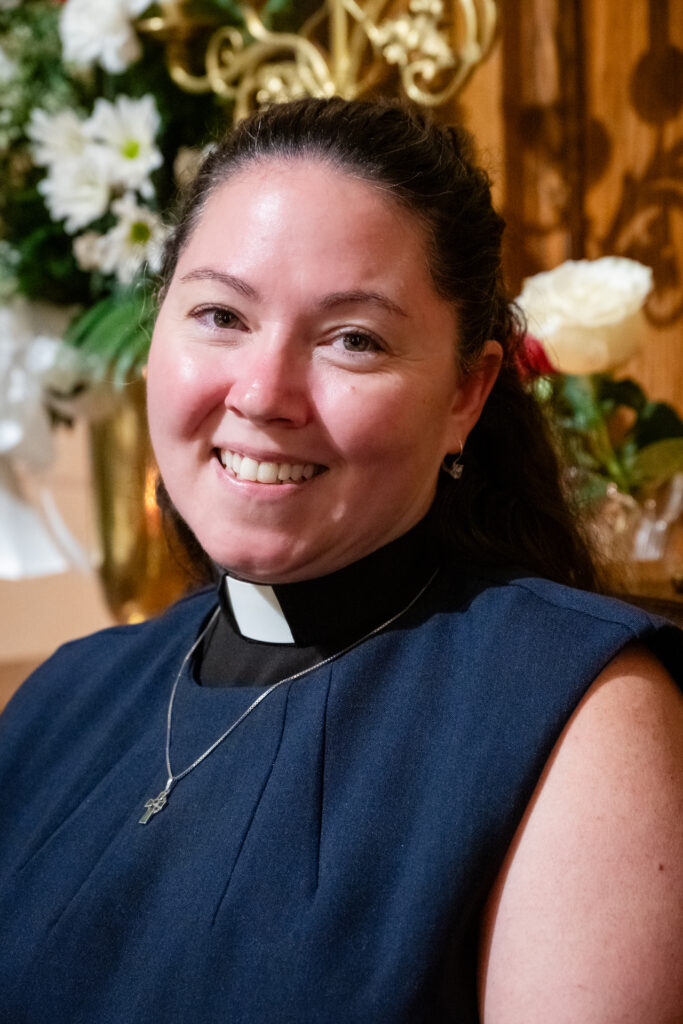
Editor’s Note: Pastor Megan Ann Shaffer is writing for Lutheran CORE for the first time. She is an NALC pastor in Pennsylvania.

“Ugh, discipleship is so law-based.” Sadly, I frequently hear this as a disciple-maker. Quite frankly, I can understand why people hold such a position, which results in their hesitancy as Lutherans to begin making disciples intentionally.

However, this interaction got me thinking. What causes such hesitancy and resistance to discipleship? One answer is easy. For years, outreach and evangelism were a silo within the church. Tasks that fell into either of these areas were often left to a team and/or the pastor. As times have changed, that approach no longer works for most congregations. Gone are the days when we could safely assume our neighbors were Christian. Now such assumptions are invalid due to the diversity of our communities.

Secondly, individual faith in America has been a matter of privacy for hundreds of years. My grandmother taught me that there are two topics you do not discuss at a dinner party: politics and religion.

Additionally, Lutherans face another layer of complexity due to the proper distinction between law and the Gospel. As those justified by faith in Christ rather than by good works, we proclaim the Gospel. Why would we focus on something that could trap our parishioners in the cycle of the law?

As disciple-makers, we have a strong tide to swim against while working to reshape the culture in which we live—if we are truly going to live out our vocation to follow Christ’s command to go and make disciples of all nations. It’s a lot to think about, so where does one begin? That was the question I found myself asking as I began my call to a congregation eager to grow. Taking all of these and many other factors into account could easily have overwhelmed me.

When faced with something overwhelming, my seminary professors emphasized that those are the moments when we need to use our toolbox. As pastors and church leaders, we are blessed with a wealth of knowledge available to us in our Lutheran tradition and within the broader Christian community.

Recently, I listened to a podcast featuring an interview with Pastor Bill Hull, who commented on the relationship between preaching and discipleship. He stated what my Lutheran homiletics professors taught me: how we preach and the focus of our preaching forms our parishioners. The idiom ‘you get what you give’ perfectly sums it up. Pastors preaching legalistic sermons form legalistically focused Christians. Likewise consumeristic preachers shape consumeristic Christians, and so on.

What Bill is saying makes sense: “If you want your parishioners to understand their identity as disciples, you must preach the Gospel accordingly.” But what made even more sense was what he said next: “We don’t start the conversation on discipleship at ‘make disciples.’” How can we expect our flocks to go out and make disciples if they have not been discipled?

We don’t start the conversation on discipleship at ‘make disciples.”

Bill Hull, Discipleship pastor and author

As an example, when I was a child, my grandmother never told me to crochet an afghan. That would have been absurd since I had no knowledge of how to go about doing so. Instead, she sat down with me and showed me the basics. As I watched, Grandma demonstrated to me how she created each stitch. Additionally, she showed me how to seamlessly join colors, so they looked like they naturally flowed together. As she worked, I sat with her and would repeat aloud what she was going to do next. Over time, I tried out simple stitches with her help. Eventually, I could also work on my own and seamlessly join colors, so they naturally flowed into a functional piece of art.

Similarly, the goal of discipleship is to empower others to follow the Great Commission, as my grandmother taught me to crochet on my own. She did this by spending time with me. Christ invested in his disciples by spending time with them. Telling our parishioners to go out and do something they have no clue how to do absolutely produces hesitancy and resistance. Conversely, if one has some familiarity with a concept because they have heard about it, it is less intimidating. So consider priming the pump of discipleship by introducing it through preaching.